Your hands are doing nothing useful right now. That is not a criticism. It is an opportunity. Ancient yoga tradition identified the hands as one of the most direct pathways to the nervous system, and yoga mudras for stress relief are the practical application of that understanding. They are not symbolic gestures. They are practical tools supported by Ayurveda, Hatha yoga, and growing modern research on vagus nerve activation and nervous system regulation.
Practicing yoga mudras for stress relief on the beaches of Goa adds a layer that indoor practice simply cannot match. The ocean air, the rhythm of the waves, and the sunrise light create a special feeling. This makes each mudra session deeper and quicker to settle. This blog gives you the full picture.
How Do Yoga Mudras Help Reduce Stress
Yoga mudras for stress relief work by stimulating nerve endings in the fingertips that connect directly to the vagus nerve, the body’s primary parasympathetic pathway. Holding a mudra while breathing slowly and mindfully sends a signal to your nervous system. It switches from sympathetic activation, the stress state, to parasympathetic rest.
This lowers cortisol, reduces heart rate, and calms the mental chatter that feeds anxiety. You can see the effect in 5 to 15 minutes of regular practice. Hand mudras for stress relief are among the easiest and quickest tools in yoga.
1. Gyan Mudra for Mental Clarity and Daily Stress
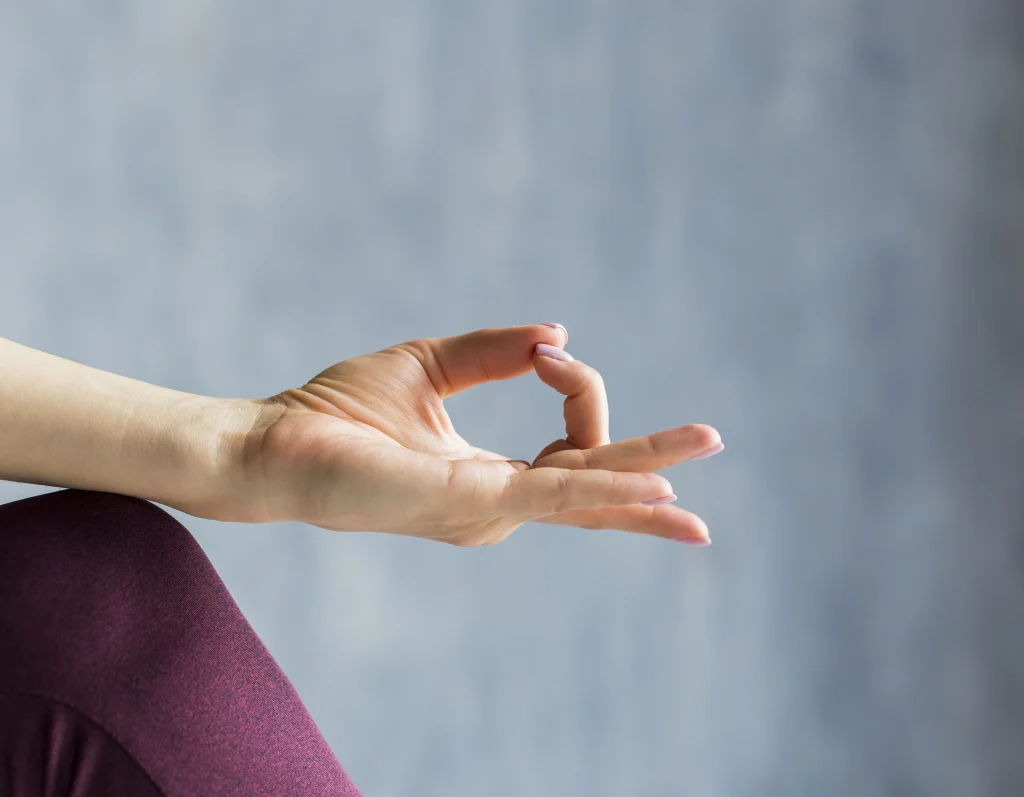
Touch the tip of your index finger to the tip of your thumb. Keep the remaining three fingers relaxed and gently extended. Rest both hands on your knees with palms facing upward. Gyan Mudra activates the air element, which in Ayurvedic physiology governs thought, movement, and nervous system activity.
This mudra works best during morning pranayama or seated meditation. Hold it for 10 to 15 minutes with a slow 4-count inhale and a 6-count exhale.
- Reduces mental chatter and repetitive anxious thinking
- Activates parasympathetic nervous system dominance
- Sharpens concentration and improves meditation depth
- Supports vagus nerve activation through breath and hand position
2. Apana Vayu Mudra for Acute Anxiety and Blood Pressure
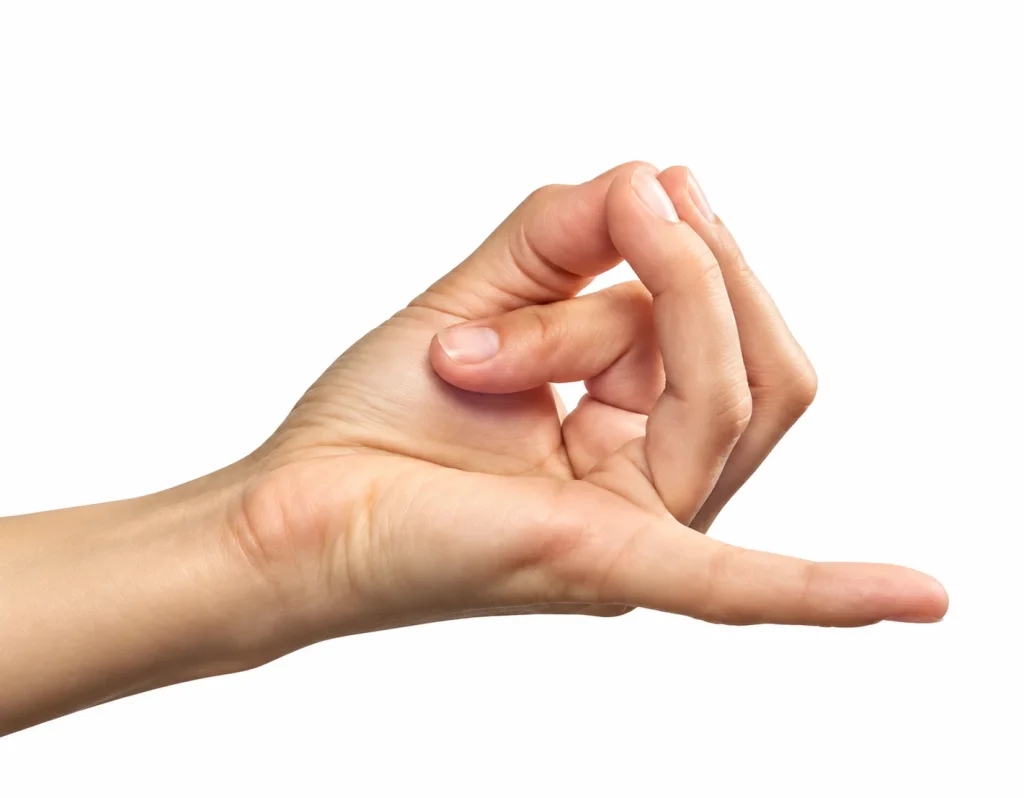
Fold the index finger inward to touch the base of the thumb. Bring the tips of your middle and ring fingers to meet the tip of the thumb. Extend the little finger straight out. This gesture is known in classical Hatha yoga as the heart mudra, and it is the most direct mudra to reduce blood pressure and acute stress in the yogic tradition.
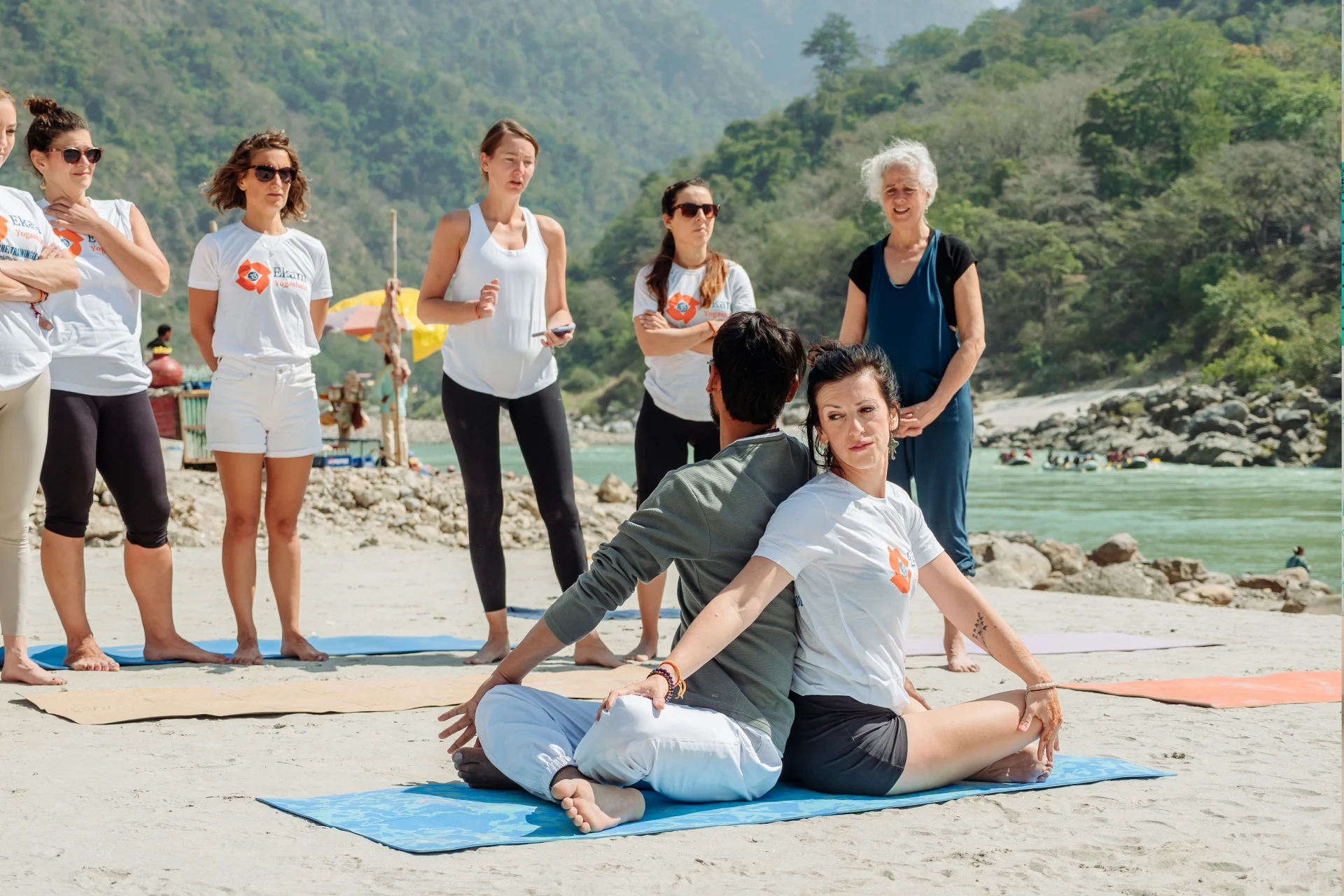
Apana Vayu Mudra is one of the best mudras for stress and anxiety when the stress response is already activated. Hold it for 5 to 15 minutes while breathing slowly. Students practicing this at Ekam Yogashala’s beachside sessions report a noticeable drop in physical tension within the first five minutes.
- Calms acute anxiety and physical tension rapidly
- Supports reduction in blood pressure during stress episodes
- Balances earth and fire elements, linked to emotional stability
- Most effective when combined with slow, extended exhale breathing
3. Prana Mudra for Vitality and Emotional Groundedness
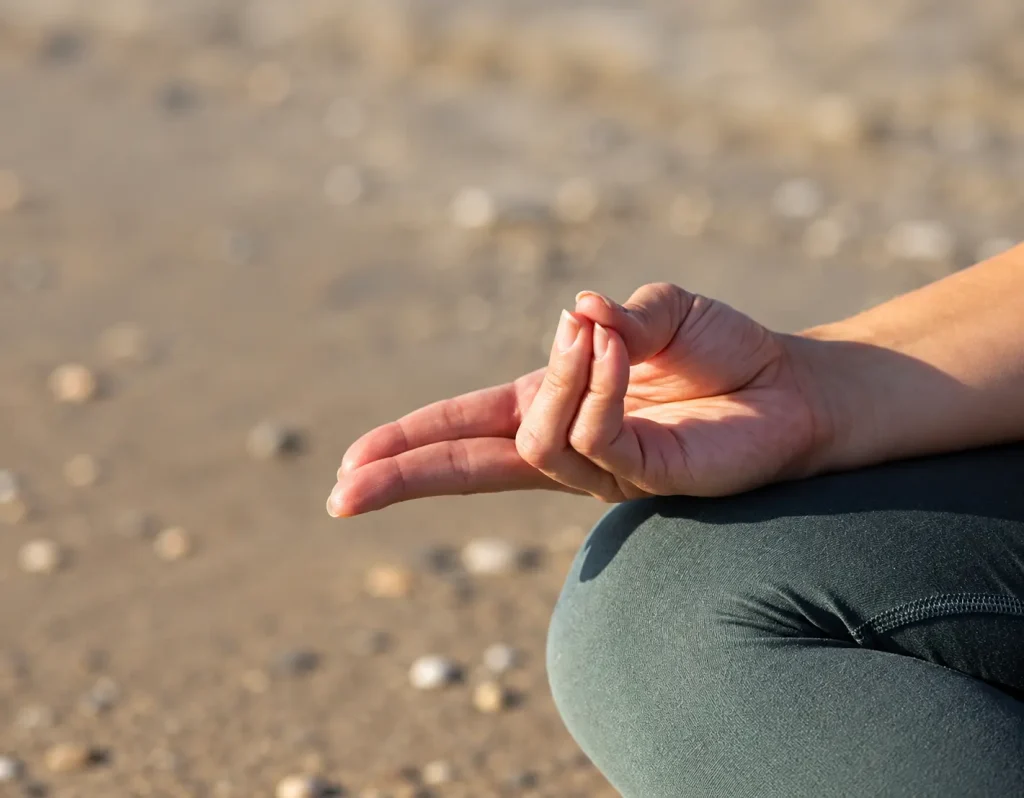
Bring the tips of your ring finger and little finger together to meet the tip of your thumb. Keep the index and middle fingers gently extended. Prana Mudra boosts prana vayu. This is the upward energy in yoga linked to vitality, immune strength, and emotional resilience.
This is one of the yoga mudras for calming the mind that works best during longer meditation sessions. Hold it for 15 to 30 minutes. Practicing Prana Mudra during beach yoga sessions for stress relief in Goa at dawn, when prana is considered most potent in yogic tradition, produces the deepest restoration.
- Restores energy depleted by chronic stress
- Builds emotional resilience and inner steadiness
- Supports immune function through prana vayu activation
- Effective for stress-related fatigue and burnout recovery
4. Vayu Mudra for Nervous System Regulation
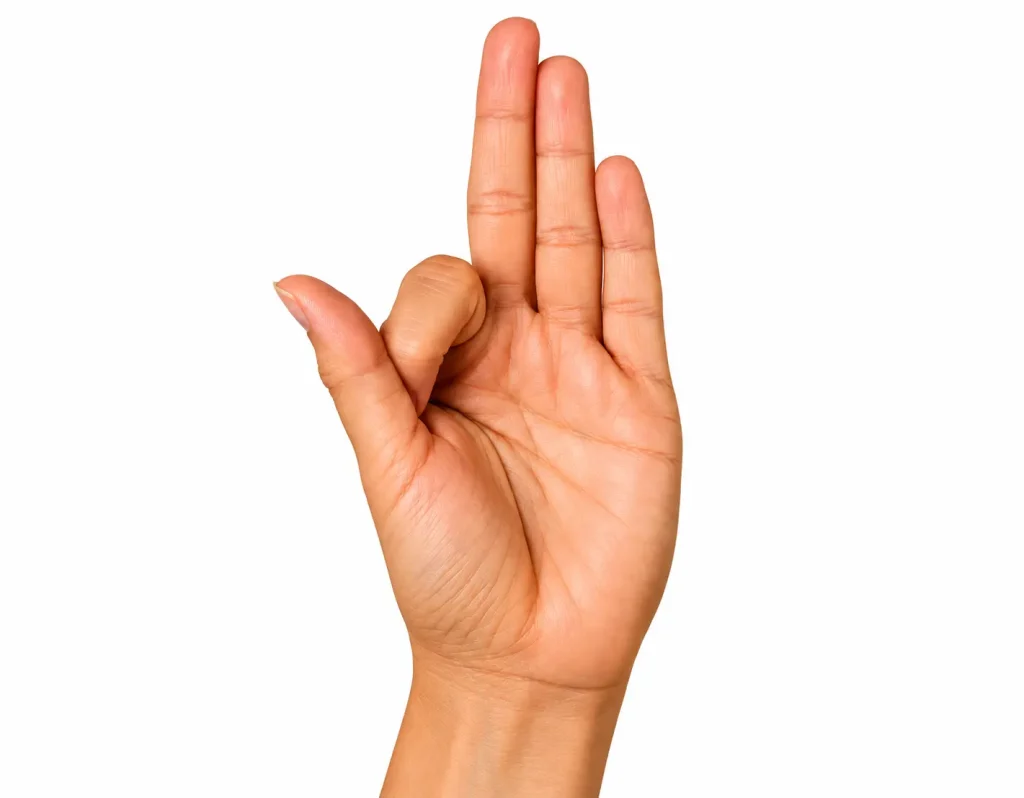
Bend the index finger inward and press it down with the base of the thumb. Keep all other fingers relaxed and extended. Vayu Mudra helps reduce excess air in the body. In Ayurveda, too much air can cause anxiety, restlessness, scattered thoughts, and an overactive nervous system.
This mudra helps calm anxiety, racing thoughts, and overthinking. Practice it for 10 to 15 minutes with pranayama for the best results.
- Reduces restlessness, racing thoughts, and mental hyperactivity
- Directly targets Vata imbalance, the Ayurvedic root of anxiety
- Calms the nervous system without sedation or heaviness
- Works fastest when paired with extended exhale breathwork
5. Shunya Mudra for Emotional Overwhelm
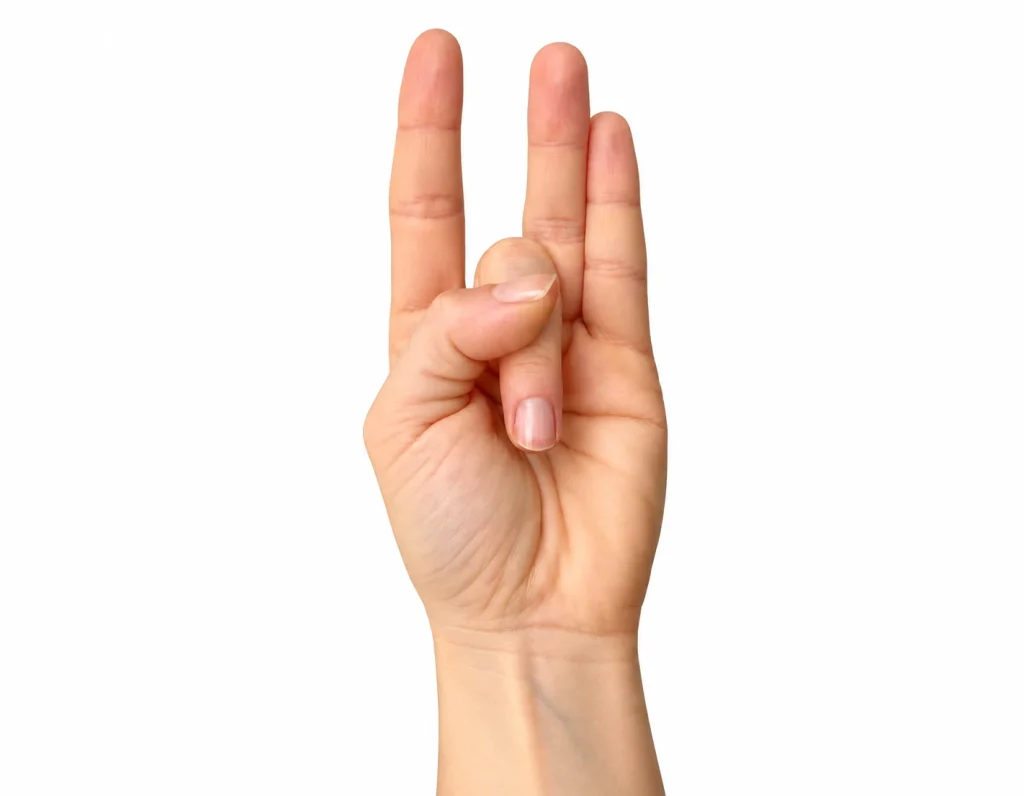
Bend the middle finger down to touch the base of the thumb and press it lightly with the thumb. Keep the remaining fingers extended and relaxed. Shunya Mudra lowers the space element in yogic physiology. When this element is too high, it can lead to feelings of emotional emptiness, overwhelm, disconnection, and sensitivity to outside stimuli. It is particularly useful for stress that feels too big to name or locate.
Shunya Mudra promotes calm and emotional balance. Practice it for 10 minutes during meditation, especially in peaceful, natural settings, to reduce stress and feel grounded.
- Reduces emotional overwhelm and sensory sensitivity
- Grounds the space element that underlies disconnection and numbness
- Supports ear, jaw, and thyroid function linked to stress holding
- Most effective when practiced in silence with eyes closed
6. Surya Mudra for Metabolic Stress and Low Energy
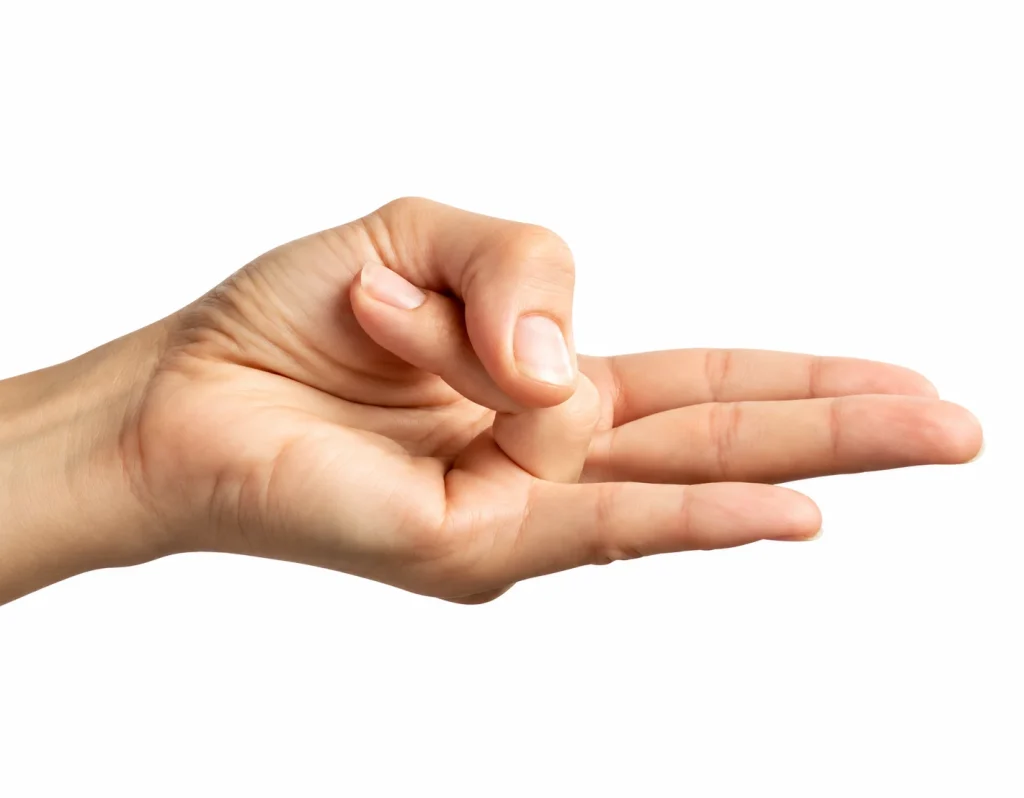
Bend the ring finger inward and press it down with the base of the thumb. Keep all other fingers extended and relaxed. Surya Mudra boosts the fire element. It’s used in Ayurveda and yoga to enhance metabolism, raise body temperature, and fight stress. This stress often causes sluggishness, weight gain, brain fog, and emotional heaviness due to too much earth element.
This mudra should be practiced in the morning rather than the evening and held for no more than 15 minutes at a time. It is one of the best mudras for stress and anxiety when the presenting symptom is low energy or depressive heaviness rather than hyperactivation. Practicing it in outdoor yoga sessions in Goa boosts the fire element. The sunlight adds to this effect.
- Combats stress-related fatigue, sluggishness, and brain fog
- Stimulates digestive fire and metabolic clarity
- Lifts depressive emotional heaviness through fire element activation
- Best practiced in the morning with direct sunlight when possible
7. Varuna Mudra for Emotional Fluidity and Release
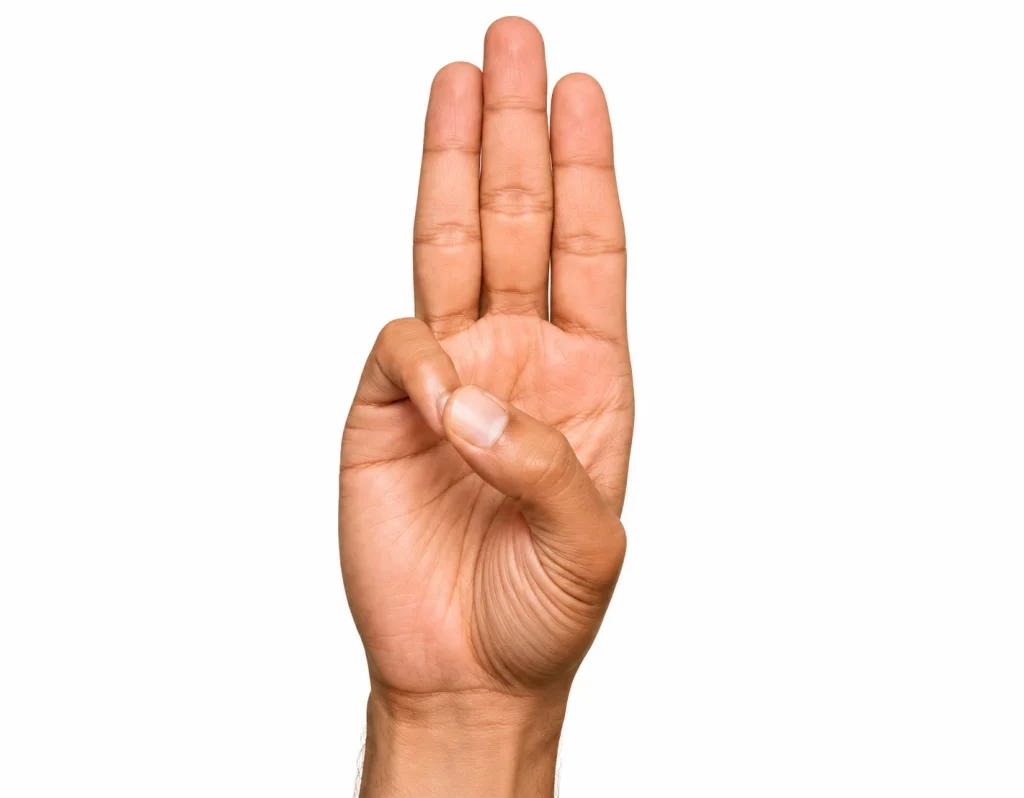
Bring the tip of the little finger to meet the tip of the thumb. Keep the remaining fingers extended and gently relaxed. Varuna Mudra activates the water element. This element helps with emotional flow and fluid balance in the body. It also aids in processing and releasing stored stress instead of keeping it in the tissues. It is one of the most emotionally oriented of all yoga mudras for stress relief.
This mudra is especially useful for people who carry stress in the body, such as muscular tightness, skin dryness, or emotional numbness. Hold it for 15 minutes during meditation for anxiety or yin yoga practice.
- Supports emotional processing and release of stored stress
- Improves fluid balance in joints, skin, and connective tissue
- Helps dissolve emotional numbness and chronic holding patterns
- Works deeply in yin yoga and long meditation sessions
8. Prithvi Mudra for Stability and Deep Grounding
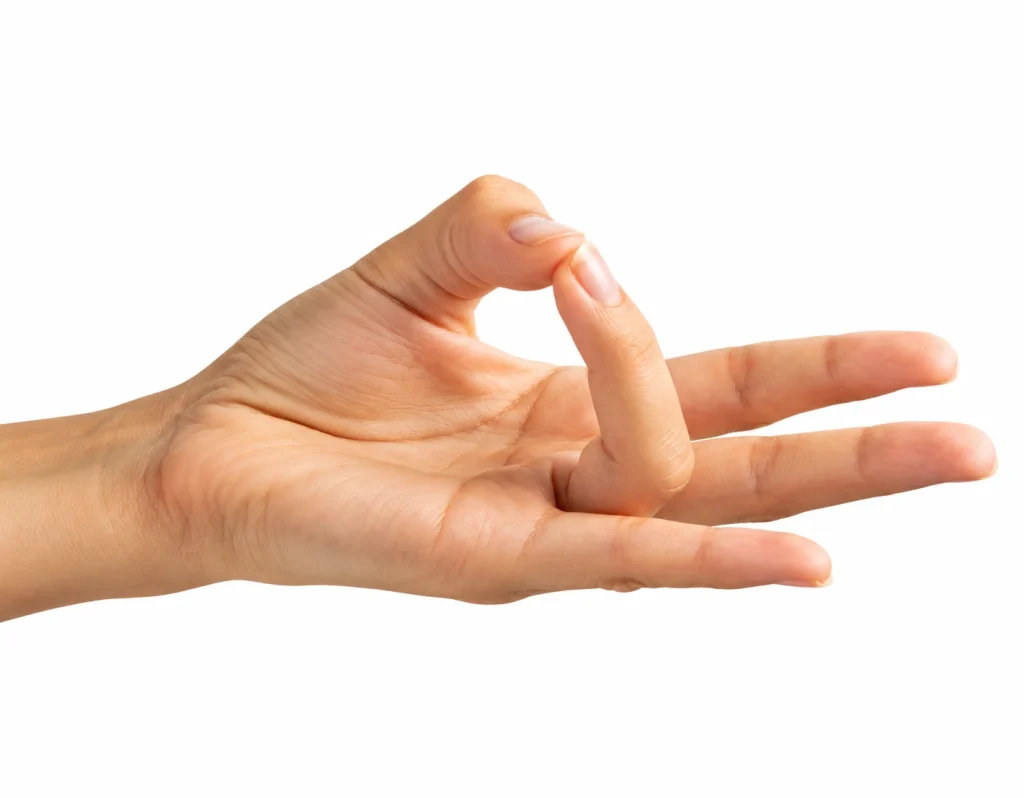
Bring the tip of your ring finger to meet the tip of your thumb. Keep the other fingers gently extended. Prithvi Mudra activates the earth element and is the foundational grounding mudra in the yogic system. When stress creates a feeling of being unanchored, emotionally unsafe, or physically depleted, Prithvi Mudra restores the sense of stability that the nervous system needs to fully rest.
This is one of the most nourishing yoga mudras for calming the mind and the body simultaneously. Hold it for 20 to 30 minutes during deep meditation or restorative yoga. Students practicing chakra balancing work at Ekam Yogashala use Prithvi Mudra specifically in root chakra sessions to restore the foundational safety upon which the entire stress response system rests.
- Restores deep physical and emotional grounding after stress depletion
- Builds structural strength in the body through earth element activation
- Supports root chakra healing and foundational nervous system safety
- Most effective during long restorative or yin yoga holds
Practice These Mudras at Ekam Yogashala in South Goa
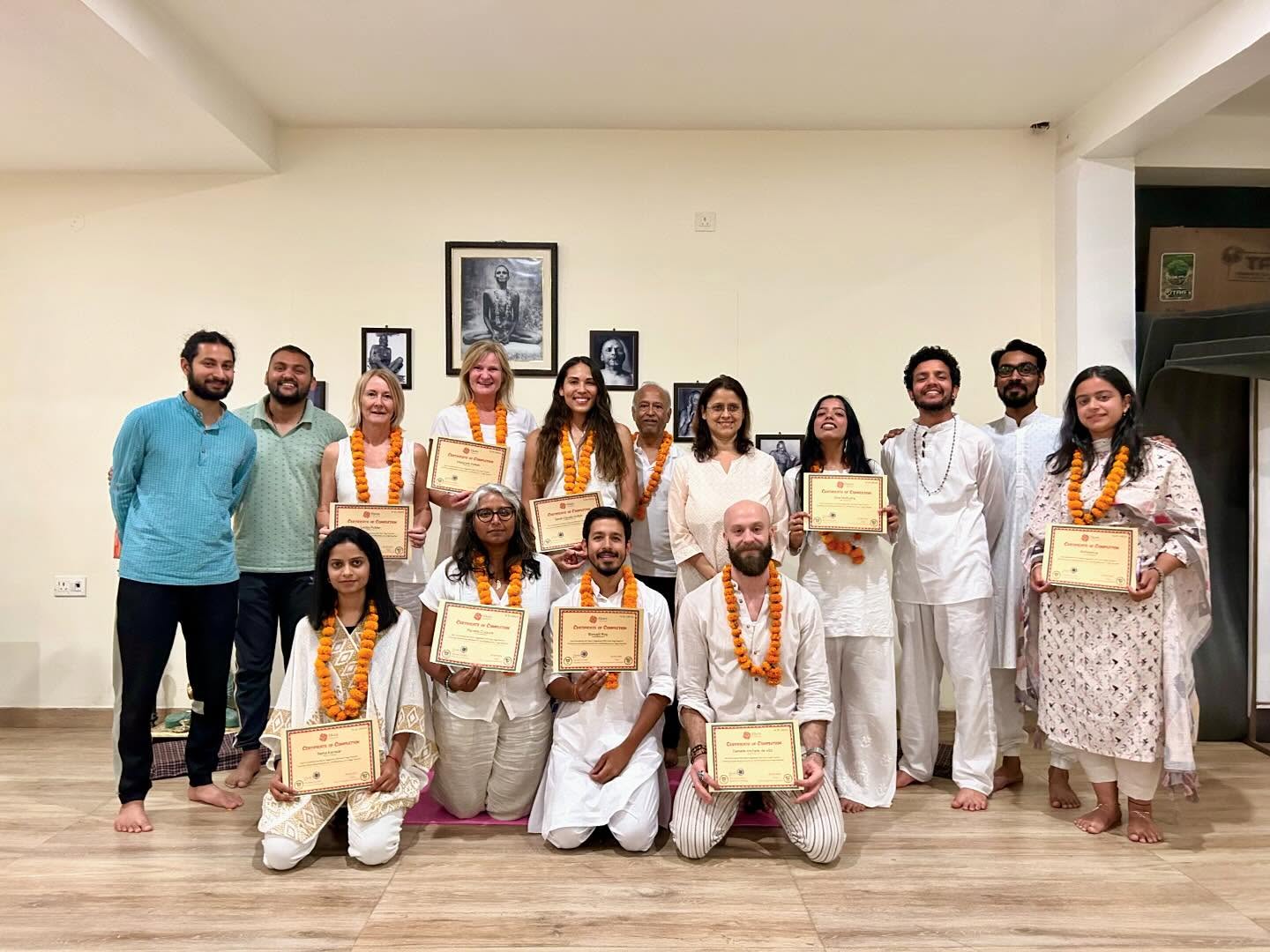
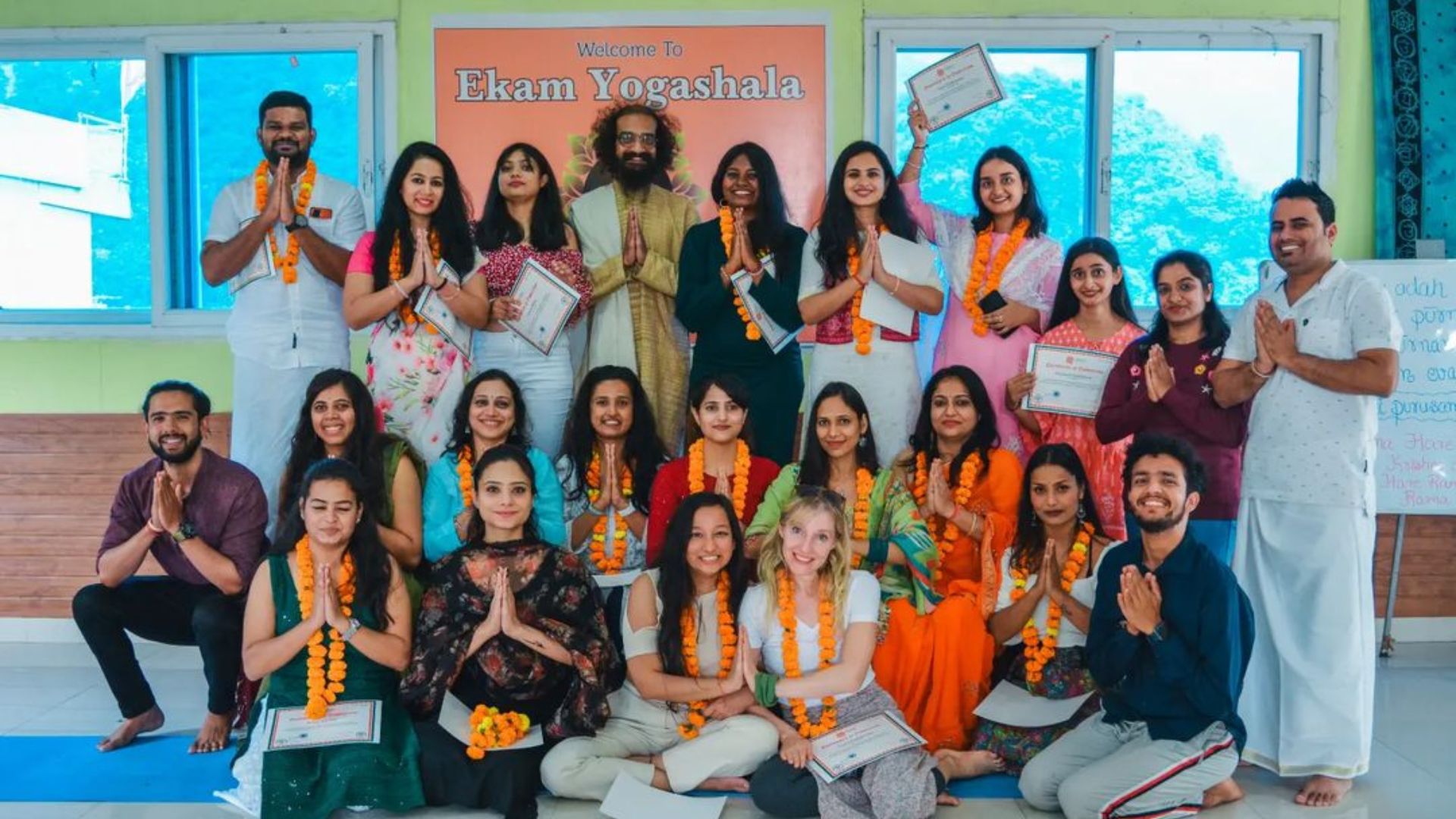
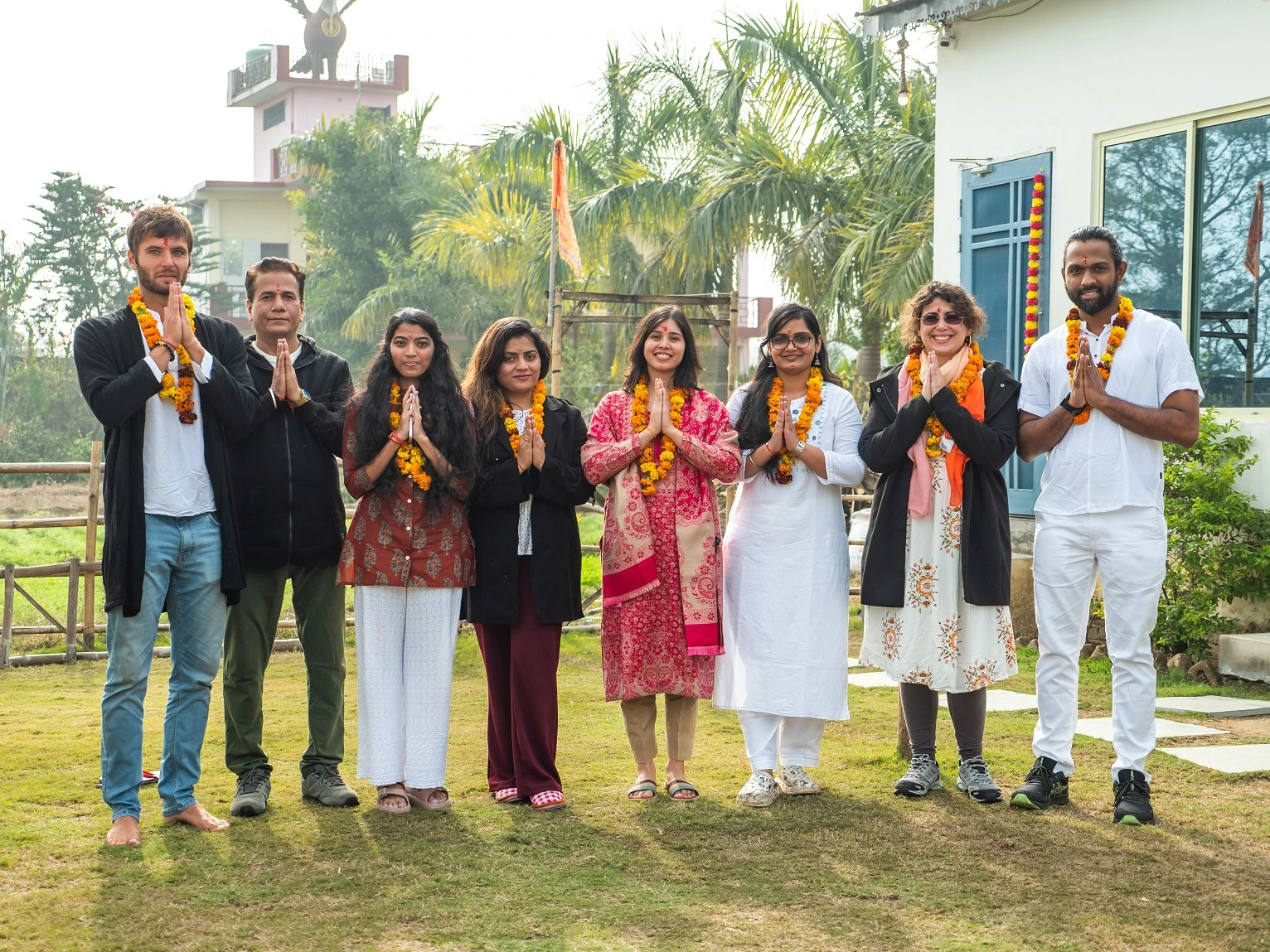
Ekam Yogashala is a Yoga Alliance USA-registered school located steps from the beach in South Goa. Mudra practice is part of all residential programs. It goes hand in hand with pranayama, Hatha, and Vinyasa yoga, philosophy, anatomy, and Ayurvedic sattvic meals. The school has small groups of 10 to 12 students. This way, each student gets direct help with technique, not just instructions for everyone.
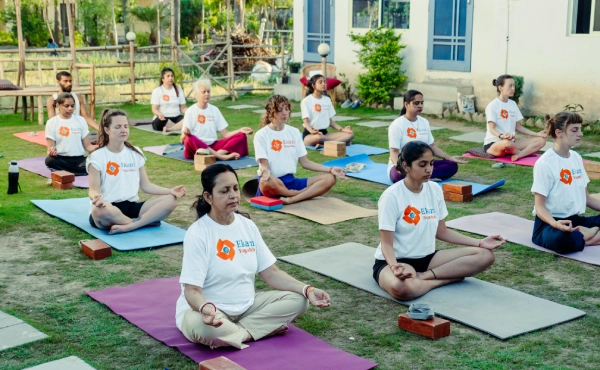
The beachside South Goa setting is not incidental to the mudra work. Practicing yoga mudras for stress relief outdoors, with ocean air and natural light, leads to quicker results than indoor practice. The calming waves help regulate breathing, too. Students from the US, UK, Europe, and across Asia consistently describe the combination of trained instruction and natural setting as the defining quality of their time at Ekam Yogashala.
- 100 Hour Yoga TTC from $599, 11 days, beginner to intermediate
- 200 Hour Yoga TTC from $1,199, 21 days, beginner to intermediate
- 300 Hour Yoga TTC from $1,449, 28 days, intermediate to advanced
- 500 Hour Yoga TTC from $2,068, 59 days, advanced mastery
- Accommodation, sattvic meals, and study materials are included in all programs
- Yoga Alliance USA certification upon completion
Start Your Mudra Practice Where the Ocean Does Half the Work
Stress does not need a complicated answer. It needs the right tool, used consistently, in an environment that supports the nervous system instead of overstimulating it. Yoga mudras for stress relief give you that tool. Goa’s beaches give you the environment. Ekam Yogashala gives you the training to make both work together at the deepest level.
Whether you practice Gyan Mudra on your living room floor this evening or Apana Vayu Mudra at sunrise on Palolem beach next month, the hands know what to do. Start there. The rest follows.
Ready to learn yoga mudras for stress relief properly, with experienced teachers and the Arabian Sea as your backdrop? Join Ekam Yogashala in South Goa and save $100 when you apply today. Apply now!
Frequently Asked Questions
Q1. What is the best mudra for stress relief?
Gyan Mudra is best for daily stress. Apana Vayu Mudra works fastest for acute anxiety and elevated blood pressure episodes.
Q2. How do yoga mudras help reduce stress?
Mudras stimulate fingertip nerve endings that activate the vagus nerve, shifting the body from sympathetic stress into parasympathetic calm.
Q3. Which mudra is good for anxiety and stress?
Apana Vayu, Vayu, and Prana Mudra are the three most clinically referenced for anxiety and nervous system stress regulation.
Q4. How long should you hold a mudra for stress relief?
Hold mudras for a minimum of 5 minutes. Optimal nervous system effects register between 10 and 15 minutes of unbroken practice.
Q5. What is Gyan Mudra used for?
Gyan Mudra cuts down on mental chatter. It sharpens focus and activates the parasympathetic nervous system. This is helpful during meditation and pranayama practice.
Q6. Can mudras really reduce anxiety?
Yes. Research shows that doing mudras with pranayama can lower salivary cortisol and anxiety. This effect happens within four weeks of daily practice.
Q7. How to practice yoga mudras for stress relief at home?
Sit upright, rest your hands on your knees, palms up, form your mudra gently, breathe slowly, and hold for 10 to 15 minutes daily.
Q8. What is the mudra to reduce blood pressure?
Apana Vayu Mudra is the primary yogic gesture for reducing blood pressure. Hold it for 15 minutes with slow, extended exhale breathing.
Q9. What is the best yoga retreat in Goa for stress and anxiety?
Ekam Yogashala in South Goa offers certified residential programs with daily mudra, pranayama, beachside yoga, and Ayurvedic sattvic meals.
Q10. How does practicing yoga mudras in Goa enhance stress relief?
Ocean negative ions, wave-regulated breathing, and natural light combine to accelerate parasympathetic activation beyond what indoor practice achieves.