Most people come to yoga for the body. They stay because something else opens that they did not expect and cannot explain. That something has a name. It is the chakras in yoga, seven spinning energy centers in the body aligned from the base of the spine to the crown, each governing a distinct layer of who you are.
Understanding the 7 chakras’ meaning does not add a spiritual layer to your practice. It reveals the one that was always there. This is the spiritual side of yoga that poses alone cannot be accessed. When you understand yogic anatomy and energy flow, every asana and every breath begins to mean something deeper.
What Are Chakras in Yoga
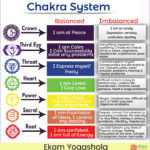
The chakras in yoga are seven energy wheels, or prana, in the subtle body. They sit along the spine. Each chakra has a seed mantra, an element, a color, and a lotus symbol. Together the 7 chakras, meaning, form a complete map of human consciousness from survival to liberation.
The word “chakra” means “wheel” or “disk” in Sanskrit. Each center is a junction point where multiple energy channels converge. The system originates in the Vedas, ancient texts from 1500 BCE, and is foundational to classical yoga philosophy.
| Chakra | Location | Color | Seed Mantra | Element |
| Muladhara (Root) | Base of Spine | Red | LAM | Earth |
| Svadhisthana (Sacral) | Below Navel | Orange | VAM | Water |
| Manipura (Solar Plexus) | Navel | Yellow | RAM | Fire |
| Anahata (Heart) | Center of Chest | Green | YAM | Air |
| Vishuddha (Throat) | Throat | Blue | HAM | Ether |
| Ajna (Third Eye) | Between Eyebrows | Indigo | OM | Light |
| Sahasrara (Crown) | Top of Head | Violet | Silence | Cosmos |
The 7 Chakras and Their Meanings
The 7 chakras and their meanings are best understood through what they govern in lived experience. Each one has an open expression and a blocked shadow. The 7 chakras meaning is a diagnostic map of your inner world, not a belief system.
1. Muladhara (Root Chakra)
The four-petaled red lotus at the base of the spine. It is the foundation of the entire system. When it flows freely, you feel safe, grounded, and physically secure. When blocked, fear and instability dominate.
Meaning
- Governs survival instincts, safety, and basic needs
- Connected to physical health, financial security, and belonging
- Blocked signs: chronic anxiety, lower back pain, financial fear, restlessness
Practice
- Yoga poses: Tadasana, Malasana, Warrior I
- Chant the seed mantra LAM during seated meditation
- Walk barefoot on earth and practice breath awareness daily
2. Svadhisthana (Sacral Chakra)
The six-petaled orange lotus below the navel, associated with the element of water. It governs everything that flows: emotion, creativity, and pleasure. Rigidity in any of these areas points here.
Meaning
- Governs creativity, emotional expression, and pleasure
- Connected to relationships, sensuality, and adaptability
- Blocked signs: emotional numbness, creative blocks, rigid thinking, hip tightness
Practice
- Yoga poses: Baddha Konasana, Pigeon, low lunges
- Chant VAM and practice fluid movement sequences
- Water-based meditation and creative journaling
3. Manipura (Solar Plexus Chakra)
The ten-petaled yellow lotus at the navel, associated with fire and transformation. It is the seat of personal power and self-worth. When it is strong, decisions come with clarity. When weak, self-doubt takes over.
Meaning
- Governs confidence, will, discipline, and personal power
- Connected to digestion, decision-making, and identity
- Blocked signs: low self-worth, people-pleasing, digestive issues, indecision
Practice
- Yoga poses: Navasana, Dhanurasana, Kapalbhati pranayama
- Chant RAM with focus at the navel center
- Core-strengthening sequences and morning sun exposure
4. Anahata (Heart Chakra)
The twelve-petaled green lotus at the center of the chest. It bridges the lower three and upper three chakras, connecting body to spirit. Chakra balancing at this level is where transformation becomes felt rather than understood.
Meaning
- Governs love, compassion, grief, and emotional balance
- Connected to forgiveness, trust, and connection to others
- Blocked signs: held grief, fear of intimacy, chest tightness, relationship patterns
Practice
- Yoga poses: Ustrasana, Bhujangasana, and supported fish pose
- Chant YAM and practice loving-kindness meditation
- Gratitude practice and time in nature
5. Vishuddha (Throat Chakra)
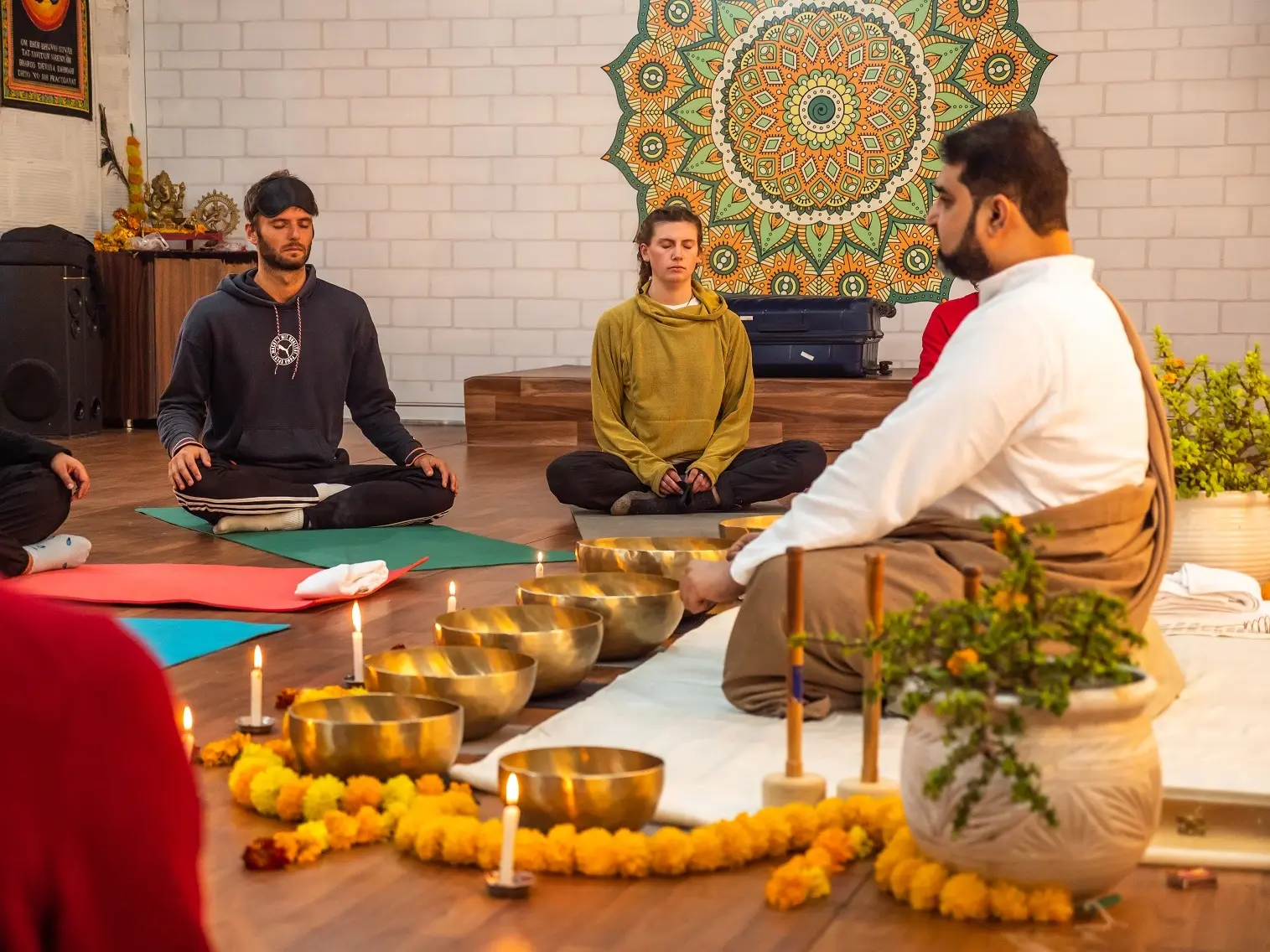
The sixteen-petaled blue lotus at the throat. Its element is ether, and its function is authentic expression. Sound healing and mantra chanting work this center directly. Speaking what is true, not what is comfortable, is its practice.
Meaning
- Governs communication, truth, and authentic voice
- Connected to listening, honest expression, and creative communication
- Blocked signs: throat tension, saying yes when you mean no, fear of speaking
Practice
- Yoga poses: Sarvangasana, Matsyasana, neck stretches
- Chant HAM, sing, and practice conscious speech daily
- Journaling and deliberate silent periods
6. Ajna (Third Eye Chakra)
The two-petaled indigo lotus between the eyebrows. The two petals represent the duality of the thinking mind that this center transcends. When open, intuition and clarity guide decisions. When blocked, analysis overrides knowing.
Meaning
- Governs intuition, insight, and inner guidance beyond logic
- Connected to imagination, discernment, and perception
- Blocked signs: mental fog, confusion, overthinking, disconnection from instinct
Practice
- Yoga poses: Balasana, Viparita Karani, Sukhasana
- Chant OM, practice trataka (candle gazing) and dream journaling
- Chakra visualization meditation focusing on indigo light at the brow
7. Sahasrara (Crown Chakra)
The thousand-petaled lotus at the crown is colored violet or white. It represents pure consciousness and connection to something larger than the individual self. No seed mantra. No element. It is activated through stillness and surrender.
Meaning
- Governs spiritual awareness, meaning, and universal connection
- Connected to faith, purpose, and transcendence of ego
- Blocked signs: persistent meaninglessness, disconnection from purpose, mechanical living
Practice
- Yoga poses: Sirsasana, Padmasana, Savasana
- Silent meditation, devotional practice, and self-inquiry
- Surrender, trust, and reduction of sensory overstimulation
How Yoga Balances the Chakras
Yoga works on the chakra system through four simultaneous channels. Asana brings awareness and circulation to specific spinal regions. Pranayama breathwork for chakras regulates prana flow through the nadis. Mantra and sound healing, including mantra chanting, use seed vibrations to activate each center. Chakra visualization meditation builds direct conscious access over time.
True chakra balancing does not isolate one center. The system works as a whole. The spiritual benefits of yoga increase when you consistently practice all four channels: asana, pranayama, mantra, and meditation. Combining them regularly makes a big difference. A single technique opens a door. The full system keeps it open.
Signs Your Energy Is Out of Balance
Signs your energy is out of balance include:
- Recurring physical symptoms with no clear medical cause.
- Emotional patterns that won’t change.
- Chronic mental fog.
- A feeling of being stuck in different areas of life.
Each of these maps to a specific chakra in the subtle body energy anatomy.
This is why yoga is more than just exercise and why ancient chakra wisdom for modern life remains relevant. The body keeps precise records. Chronic lower back pain, tight hips, digestive complaints, unexpressed feelings, and loss of meaning are not random. They are the chakra system communicating. The practice listens.
How Yoga Teacher Training Deepens Chakra Understanding
How yoga teacher training helps with chakras: A residential program teaches about the subtle body. It covers chakras, nadis, prana vayus, and the kosha model. This approach blends practical knowledge with philosophy. This is knowledge that changes how you teach and how you live, not content you memorize for an exam.
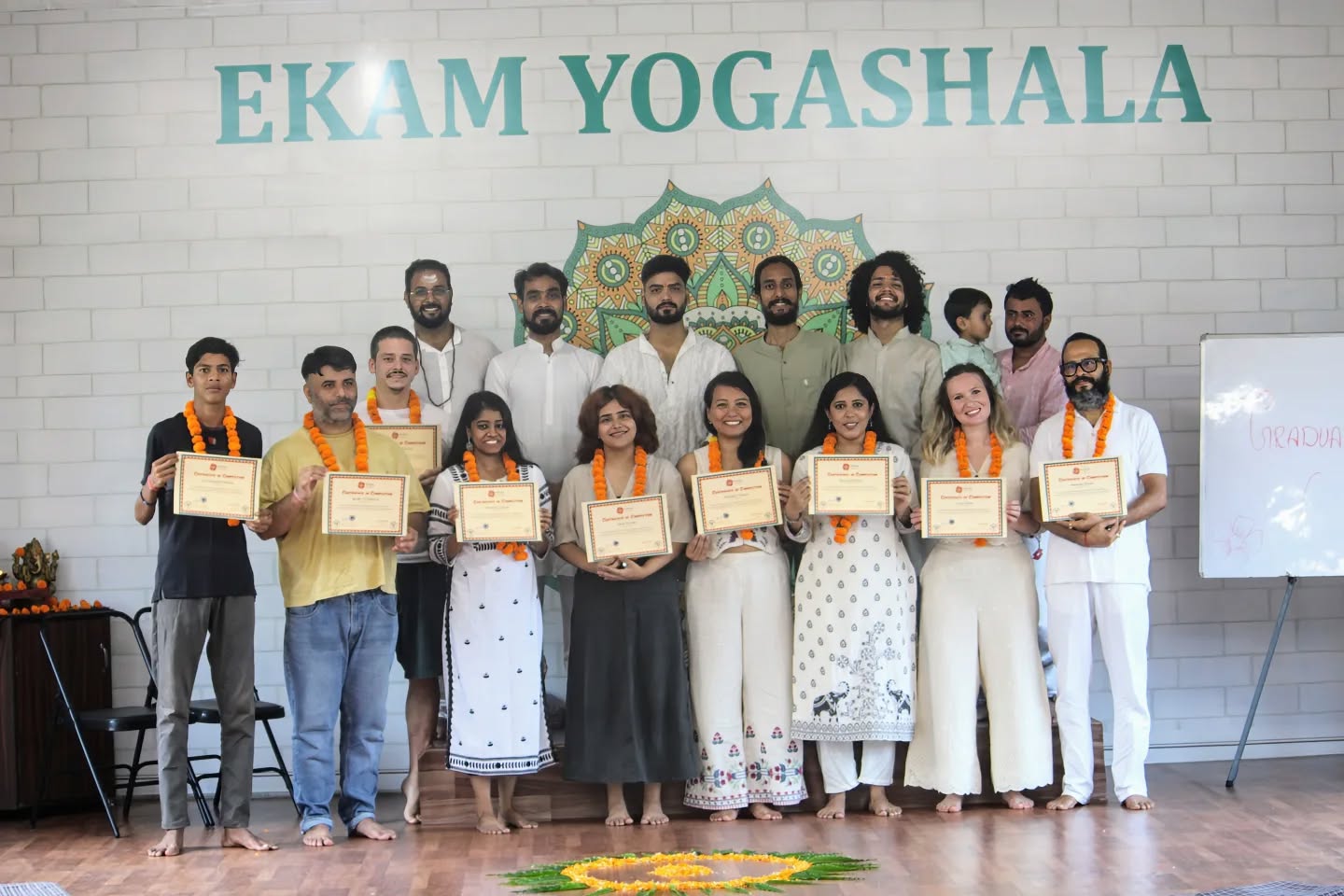
At Ekam Yogashala in Rishikesh, philosophy sessions led by Sadhushree Ji (RYT 500, 12 plus years) treat chakra study as lived inquiry. Students work with the system in their own practice first, then learn to guide others through it. The result is an understanding that no book study alone produces. Balancing your 7 chakras through yoga is a personal journey, not just theory.

Conclusion
The chakras in yoga are not a belief system layered onto the physical practice. They are the map the physical practice was always designed to follow. When you understand the 7 chakras’ meaning, every pose, every breath, and every moment of stillness on the mat becomes more than movement. It becomes navigation. The spiritual side of yoga is not separate from the practice you already have. It is the depth waiting inside it.
At Ekam Yogashala in Rishikesh, this depth is part of the curriculum from day one. Philosophy sessions led by Sadhushree Ji (RYT 500, 12 plus years in yoga philosophy and meditation) bring the chakra system alive as lived inquiry, not academic content. If you are ready to understand yoga from the inside out, this is where that understanding begins. Apply Now !
Frequently Asked Questions
Q1. What are chakras in yoga?
Chakras in yoga are seven energy centers along the spine that regulate physical health, emotional patterns, and spiritual awareness according to classical yogic tradition.
Q2. How do I know if a chakra is blocked?
Recurring physical symptoms, unchanging emotional patterns, and stuck behavioral habits are clear signs a chakra needs attention.
Q3. What is the correct breathing technique for chakra meditation?
Slow, diaphragmatic breathing with the seed mantra (LAM through OM) at each chakra is the main technique for pranayama breathwork.
Q4. How long does chakra balancing through yoga take?
Chakra balancing builds progressively over months of consistent practice. Intensive residential training accelerates the process because all four channels work simultaneously every day.
Q5. Can yoga teacher training help me understand chakras more deeply?
Yes. A residential YTT at a school like Ekam Yogashala teaches yogic anatomy and energy flow. This approach helps you build a deep understanding that self-study can’t match.