Blood pressure does not stay the same throughout the day. It rises sharply in the first two hours after waking, often called the morning surge, and this is when the majority of cardiac events in hypertensive patients occur. It dips during sleep in healthy individuals, but in approximately 25 to 30 % of hypertensive patients, it does not dip at all. Understanding this daily rhythm is the key to knowing when your mudra for blood pressure and yoga practice will do the most good.
This blog answers the question directly and with current research. Morning or evening yoga mudra for blood pressure control: what science says. Discover which mudra works best for high BP at these times. Learn how to create a daily routine that effectively lowers your numbers.
Can Yoga Help Control High Blood Pressure
Yes. Yoga helps control high blood pressure through three primary mechanisms.
- First, pranayama and slow breathwork trigger the parasympathetic nervous system. This helps reduce heart rate and lower peripheral vascular resistance.
- Second, restorative poses and Shavasana reduce cortisol and adrenaline, the hormones that sustain elevated blood pressure.
- Third, mudra practice with extended exhale breathing directly stimulates the vagus nerve.
Research shows that yoga for hypertension patients can help support better blood pressure management. A 2025 study in PLOS ONE found that yoga poses, pranayama, and relaxation can lower both systolic and diastolic blood pressure.
A study published in the Canadian Journal of Cardiology found that yoga may improve blood pressure and heart rate more than stretching alone. It helps calm the nervous system, reduce stress responses, and promote relaxation.
Is It Better to Do Yoga in the Morning or Evening for Blood Pressure
Morning and evening yoga can both support healthy blood pressure, but the best time depends on your individual blood pressure pattern and daily routine.
i. Morning Yoga for Blood Pressure
Morning yoga may help manage the natural morning blood pressure rise. Gentle asanas, pranayama, and relaxation can calm the nervous system and support balanced blood pressure throughout the day.
ii. Evening Yoga for Blood Pressure
Evening yoga helps release daily stress, promote relaxation, and improve sleep quality. It may be especially helpful for people whose blood pressure remains elevated at night instead of naturally dropping.
Ultimately, consistency matters most. Choose morning or evening yoga based on your blood pressure pattern, lifestyle, and your healthcare provider’s guidance for safe practice.
Morning Yoga Benefits for Blood Pressure
Morning yoga is great for blood pressure, especially between 6 and 9 AM. During this time, cortisol levels rise, and the sympathetic nervous system kicks in. This creates the highest risk for cardiovascular issues in the day. Doing yoga, pranayama, and mudra for blood pressure during this time helps lower the morning BP surge. It activates the parasympathetic system before stress hormones peak. This is the best time for active pranayama, sun salutations, and Gyan Mudra practice.
i. Best Yoga Poses to Do in the Morning for Hypertension
The best yoga poses to do in the morning for hypertension are those that gently activate circulation without spiking heart rate or requiring sudden exertion. The morning cardiovascular system is already under elevated load from the cortisol surge. Avoid inversions and vigorous sequences in the first 20 minutes of waking.
- Sukhasana with Nadi Shodhana Pranayama for 5 to 10 minutes to regulate autonomic tone before any movement
- Cat and Cow to gently activate the spine and breathe into the thoracic cavity
- Viparita Karani (Legs-Up-The-Wall) for 5 minutes to reduce peripheral resistance and lower morning BP
- Child’s Pose held for 3 to 5 minutes to activate the parasympathetic nervous system
- Gyan Mudra with slow breathing for 10 minutes as the closing practice
ii. Best Mudra for High BP in the Morning
The best mudra for high Blood Pressure in the morning is Gyan Mudra, practiced with Nadi Shodhana Pranayma before breakfast. Touch the index fingertip to the thumb tip, keep the remaining fingers extended, and rest hands on knees with palms up.
Breathe with a 4-count inhale and 6-count exhale. Hold for 10 to 15 minutes. This combination lowers cortisol, boosts parasympathetic activity, and directly fights the hormonal cause of the morning BP spike before it peaks.
Evening Yoga for Blood Pressure Control
Evening yoga for blood pressure control helps reduce daily stress, calm the nervous system, improve sleep, and support healthier nighttime blood pressure levels.
i. Can Evening Yoga Reduce Nighttime Blood Pressure Spikes
Yes. Can evening yoga reduce nighttime blood pressure spikes? This is a question with a clinically relevant answer. Non-dippers are about 25 to 30 % of hypertension patients. Their blood pressure doesn’t lower enough during sleep. This group has a much higher cardiovascular risk than those with normal nocturnal dipping.
Evening yoga, specifically restorative poses combined with extended exhale pranayama and mudra for BP control, reduces the sympathetic nervous system activation that prevents nocturnal BP from falling. Heart rate variability shows how flexible the autonomic nervous system is. Regular evening yoga practice often improves this measure. This improvement links to better nighttime blood pressure dipping patterns.
ii. Best Time of Day to Do Pranayama for Hypertension
The best time to do pranayama for hypertension is early morning or evening, helping calm the nervous system and support healthy blood pressure.
- Morning: Practice between 6–8 AM, preferably before breakfast.
- Evening: Practice between 7–9 PM, once dinner has settled.
- Try Bhramari Pranayama for relaxation and stress relief.
- Practice Nadi Shodhana with slow, extended exhalations.
- Avoid vigorous pranayama immediately after meals.
iii. Yoga Breathing Exercises for High Blood Pressure Before Bed
The best yoga breathing exercises for high blood pressure before bed focus on slow breathing with a longer exhale to encourage relaxation and calm the nervous system.
- Inhale gently for 4 counts and exhale for 8 counts.
- Practice Bhramari Pranayama to relax before sleep.
- Try 5 to 10 gentle rounds of breathing.
- Practice comfortably while resting in Shavasana.
- Keep the breath natural and avoid straining.
Daily Yoga Routine for BP Control: Morning and Evening Combined
The most effective daily yoga routine for BP control uses both windows. This is the protocol that compounds cardiovascular benefit across the full 24-hour BP cycle.
- Morning (6 to 8 AM): 5 minutes Nadi Shodhana Pranayama, then 10 minutes of Gyan Mudra as a mudra for blood pressure with slow breathing, then 10 minutes of gentle movement including Legs-Up-The-Wall and Child’s Pose
- Evening (7 to 9 PM): 10 minutes Apana Vayu Mudra with a 4-to-8 breath ratio as the primary mudra for high BP intervention, then 10 minutes Bhramari Pranayama, then 10 minutes Shavasana as the closing reset
- Total daily investment: 45 minutes split across two sessions
- Expected timeline for measurable results: 2 to 4 weeks of consistent daily practice
Yoga for high blood pressure timing is not about finding the single perfect moment. It is about understanding what your body’s BP cycle needs at each point in the day and placing the right practice there.
Learn This Practice Properly at Ekam Yogashala
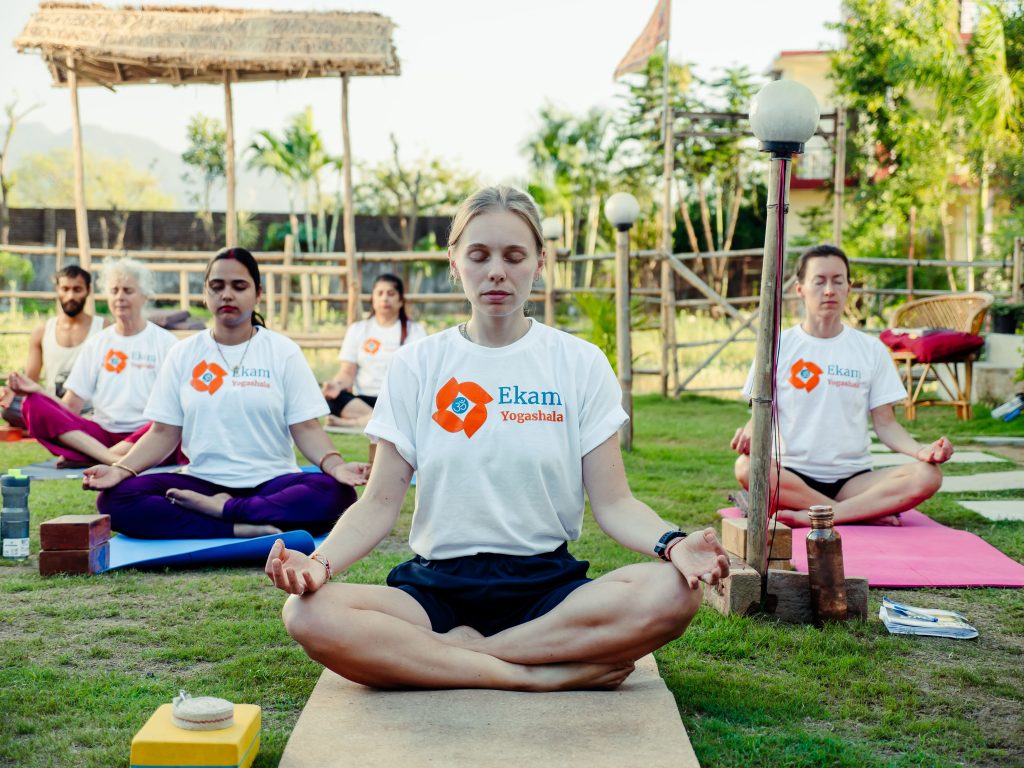
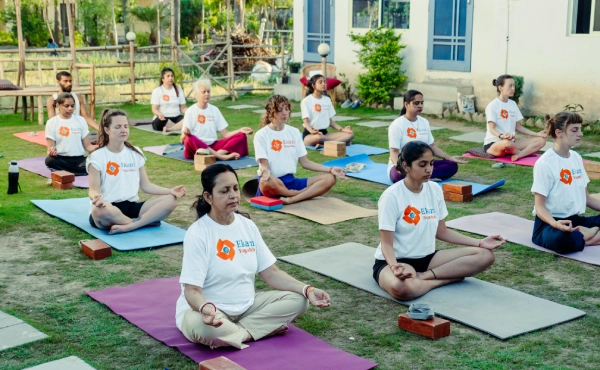
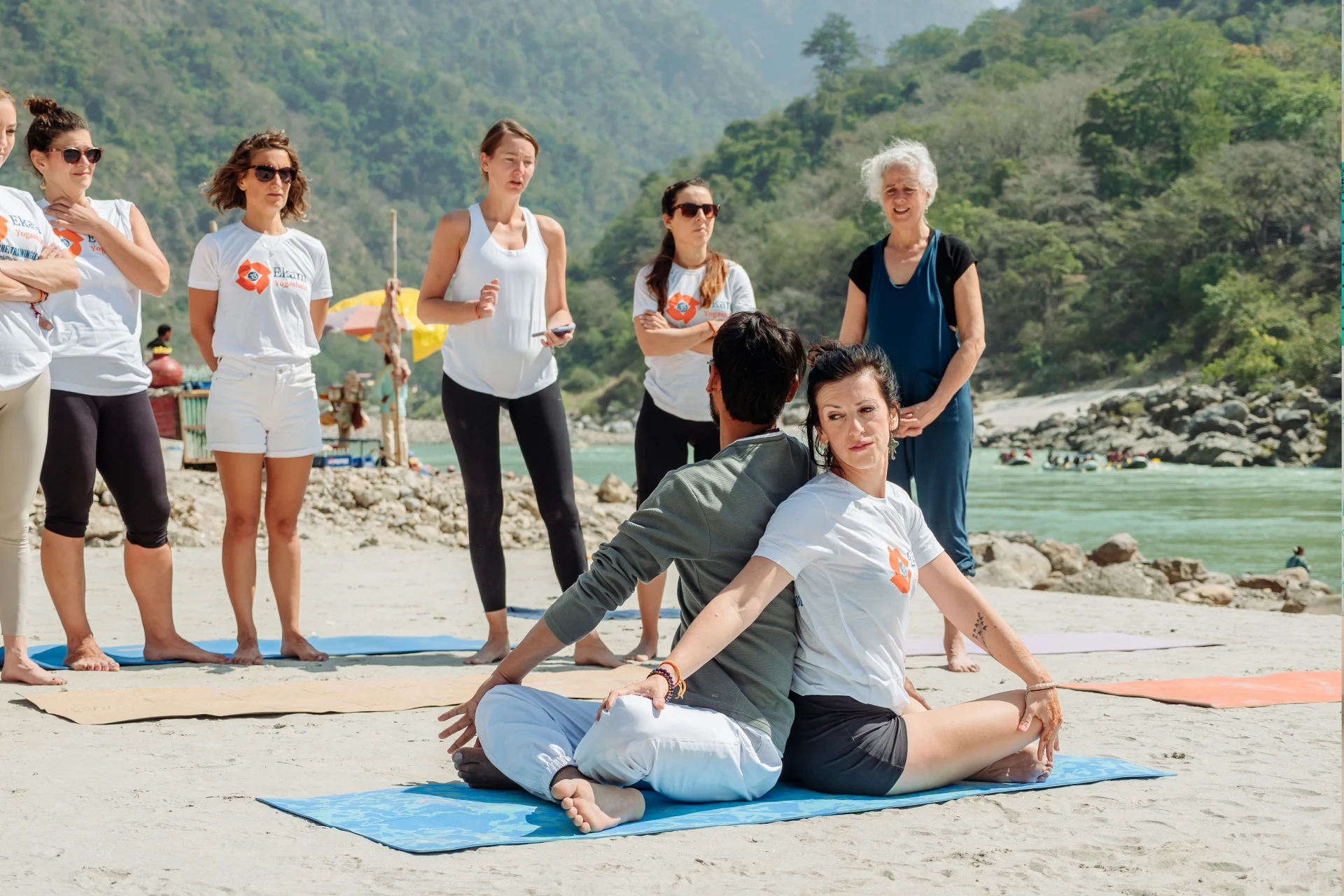
Reading about BP yoga is the start. Real change happens when you practice under experienced teachers in a structured residential program. This program combines pranayama, mudra, asana, and yogic philosophy into a daily routine.
Ekam Yogashala is a Yoga Alliance USA registered school with residential programs in Rishikesh, Goa, Kerala, and Nepal. The school has trained over 2,000 students from the US, UK, Europe, and Asia. To ensure direct teacher guidance, every program is taught in small groups of 10 to 15 students. These courses integrate mudra and pranayama into a daily schedule alongside Hatha and Ashtanga Yoga, anatomy, and yogic philosophy.
- 100 Hour Yoga TTC from $550 in Rishikesh, 12 days
- 200 Hour Yoga TTC from $799 in Rishikesh and $1,199 in Goa
- 300 Hour Yoga TTC from $999 in Rishikesh, 28 days
- All programs include accommodation, sattvic meals, materials, and Yoga Alliance USA certification
The Best Time Is the One You Actually Keep
Morning yoga addresses the highest-risk BP window of the day. Evening yoga protects the nocturnal cycle that determines long-term cardiovascular health. A mudra for blood pressure practiced consistently at either time produces real, measurable results. The research is detailed. The practice is simple. The only variable is whether you do it.
Start with 15 minutes. Pick one time. Practice Gyan Mudra with slow breathing every morning, or Apana Vayu Mudra with an extended exhale every evening. Add the second session when the first becomes a habit. That is the mudra for high BP protocol that actually changes your numbers over time.
Want to learn pranayama and mudra for blood pressure from experienced teachers in a structured residential program? Ekam Yogashala offers certified programs in Rishikesh and Goa. Apply now and save $100 on your enrollment.
Explore Programs at Ekam Yogashala
Frequently Asked Questions
Q1. Is it better to do yoga in the morning or evening for blood pressure?
Both work through different mechanisms. Morning yoga reduces the BP surge. Evening yoga lowers nighttime readings. Both together produce the strongest overall results.
Q2. What time of day is best for lowering blood pressure with yoga?
6 to 8 AM targets the morning BP surge. 7 to 9 PM targets nocturnal elevation. Non-dippers benefit more from consistent evening practice than morning-only routines.
Q3. Can yoga help control high blood pressure?
Yes. Many peer-reviewed studies show that yoga lowers systolic and diastolic blood pressure. It does this by activating the parasympathetic system, reducing cortisol levels, and stimulating the vagus nerve.
Q4. How does evening yoga affect nighttime blood pressure?
Evening yoga lowers sympathetic nervous system activity before sleep. This helps improve nighttime blood pressure dipping and heart rate variability in patients with high blood pressure.
Q5. What yoga poses are safe for high blood pressure?
Child’s Pose, Legs-Up-The-Wall, Shavasana, Cat and Cow, and seated pranayama are safe and effective for hypertension patients at any time of day.
Q6. How long should you do yoga daily to lower blood pressure?
15 to 30 minutes daily of combined pranayama, gentle postures, and Shavasana produces measurable blood pressure reductions within two to four weeks.
Q7. Which mudra for high BP works best in the morning?
Gyan Mudra with Nadi Shodhana Pranayama is most effective in the morning. It directly counteracts the cortisol-driven morning blood pressure surge before it peaks.
Q8. Which mudra for blood pressure works best in the evening?
Apana Vayu Mudra with a 4-to-8 breath ratio is the most effective evening mudra for blood pressure, reducing nighttime cardiovascular load before sleep.
Q9. What are the best yoga breathing exercises for high blood pressure before bed?
Bhramari Pranayama and extended exhale Nadi Shodhana at a 4-to-8 ratio are the most effective breathing exercises for pre-sleep blood pressure reduction.
Q10. What is the best time of day to do pranayama for hypertension?
6 to 8 AM before breakfast and 7 to 9 PM after dinner are the two most effective pranayama windows for daily hypertension management.