Your hands already know more than you think. Each finger has a nerve pathway, a basic link, and ties to the autonomic nervous system. Yogic science identified this long before modern medicine did. A yoga mudra is how you use those pathways deliberately, and the results are more practical than most people expect before they try it.
This guide explains what a yoga mudra is and how it affects the body. It covers five key types and shows how specific gestures can help with blood pressure, stress, and nervous system health. So, let’s get started!
What Is a Mudra in Yoga
A yoga mudra is a conscious hand gesture. It helps direct the flow of prana, or life force energy, through specific channels in the body. The word “mudra” comes from Sanskrit and means “seal” or “gesture”. Each finger represents one of the five elements. When you practice a mudra, these elements work together to support your physical, mental, and emotional well-being.
The distinction that matters here is that a yoga mudra is not a symbolic decoration. It is a functional tool. When you press certain fingers together or hold your hand in a specific way, you create a circuit in the peripheral nervous system. That circuit sends measurable signals to the brain, the autonomic nervous system, and the endocrine system. Yoga mudras do more than aid meditation. They bring real changes to heart rate, cortisol levels, blood pressure, and digestion.
How Do Yoga Mudras Work
Yoga mudras work by stimulating the nerve endings in your fingertips, which are connected to the brain and various organs through the peripheral nervous system. These hand gestures also influence the flow of prana through the body’s energy channels (nadis), helping support physical, mental, and emotional balance.
Research in the International Journal of Yoga shows that doing mudras with slow, controlled breathing can reduce stress, lower heart rate, and activate the parasympathetic nervous system in just 10 to 15 minutes. Combining mudras with pranayama boosts these benefits. It improves the flow of prana in the body.
Key Ways Yoga Mudras Support the Body
- How do yoga mudras work? They combine hand positions with breath to improve the connection between the mind and body.
- Each mudra influences a specific energy pathway (nadi), supporting the smooth flow of prana.
- Different finger combinations help balance the five elements in the body, promoting overall harmony.
- Regular practice may improve focus, relaxation, emotional stability, and inner awareness.
- Practising mudras with deep, mindful breathing can enhance their calming and restorative effects.
What Are the Different Types of Yoga Mudras and What Do They Do
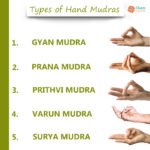
Understanding the types of yoga mudras helps you choose the right practice for your specific intention. The vast majority of daily mudra practice involves hand mudras in yoga, which is the Hasta Mudra category. The five mudras below are the most important starting points for any practitioner.
1. Gyan Mudra
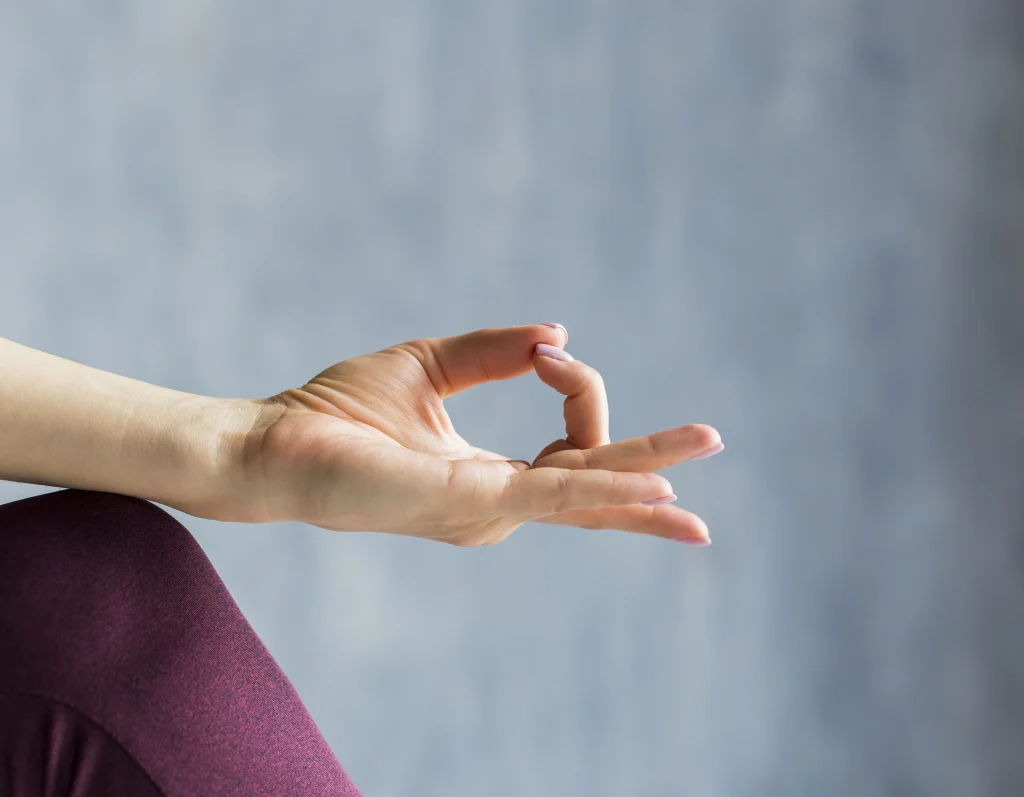 Gyan Mudra is made by touching the tip of your index finger to your thumb while keeping the other fingers relaxed. It helps improve focus, mental clarity, and calmness. Sit comfortably with your palms facing up, form the mudra, and practice it with slow breathing for 10 to 15 minutes.
- Reduces mental chatter and anxiety-driven overthinking
- Activates the parasympathetic nervous system for calm focus
- Enhances memory retention and concentration during study or meditation
- One of the best mudras for anxiety and stress relief for daily use
2. Prana Mudra
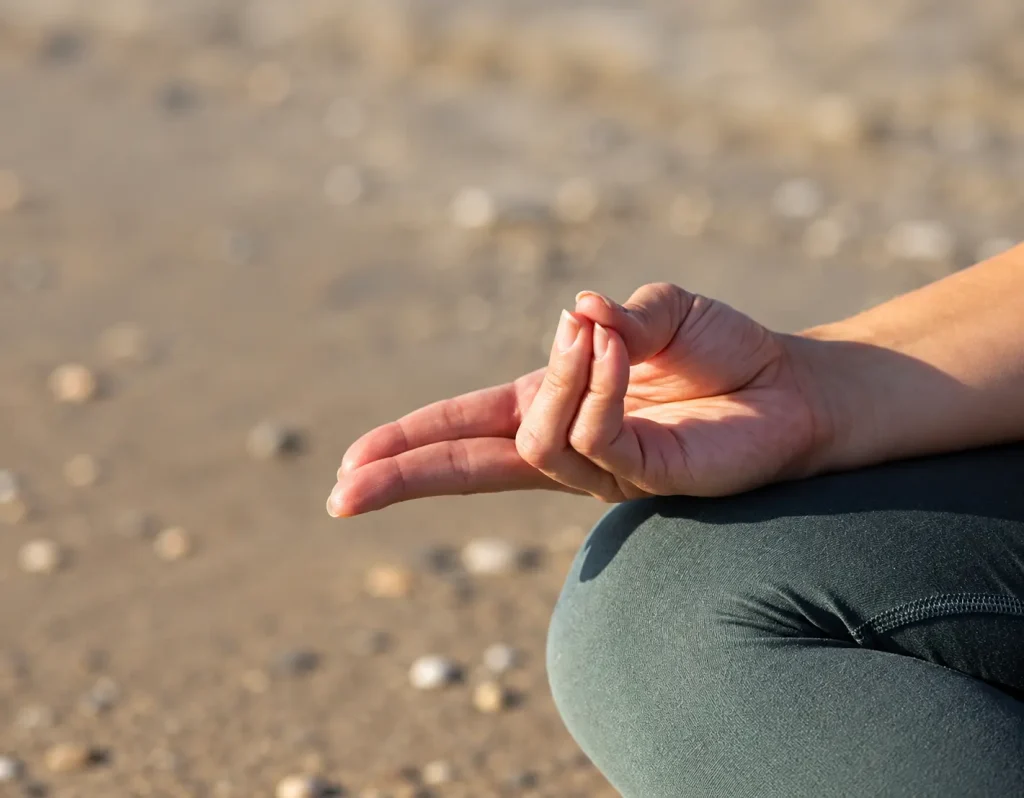 Prana Mudra connects the tips of the ring finger and little finger to the tip of the thumb, with the index and middle fingers gently extended. It activates prana vayu, the upward-moving life force current that governs vitality, immunity, and emotional resilience. This mudra is particularly powerful when combined with pranayama breathing. Hold for 15 to 30 minutes during morning meditation for the strongest energy-restoring effect.
- Restores depleted energy and builds long-term vitality
- Supports immune function and overall physical resilience
- Balances water and earth elements to stabilize emotional well-being
- Deepens pranayama practice by opening pranic channels before breathwork
3. Anjali Mudra
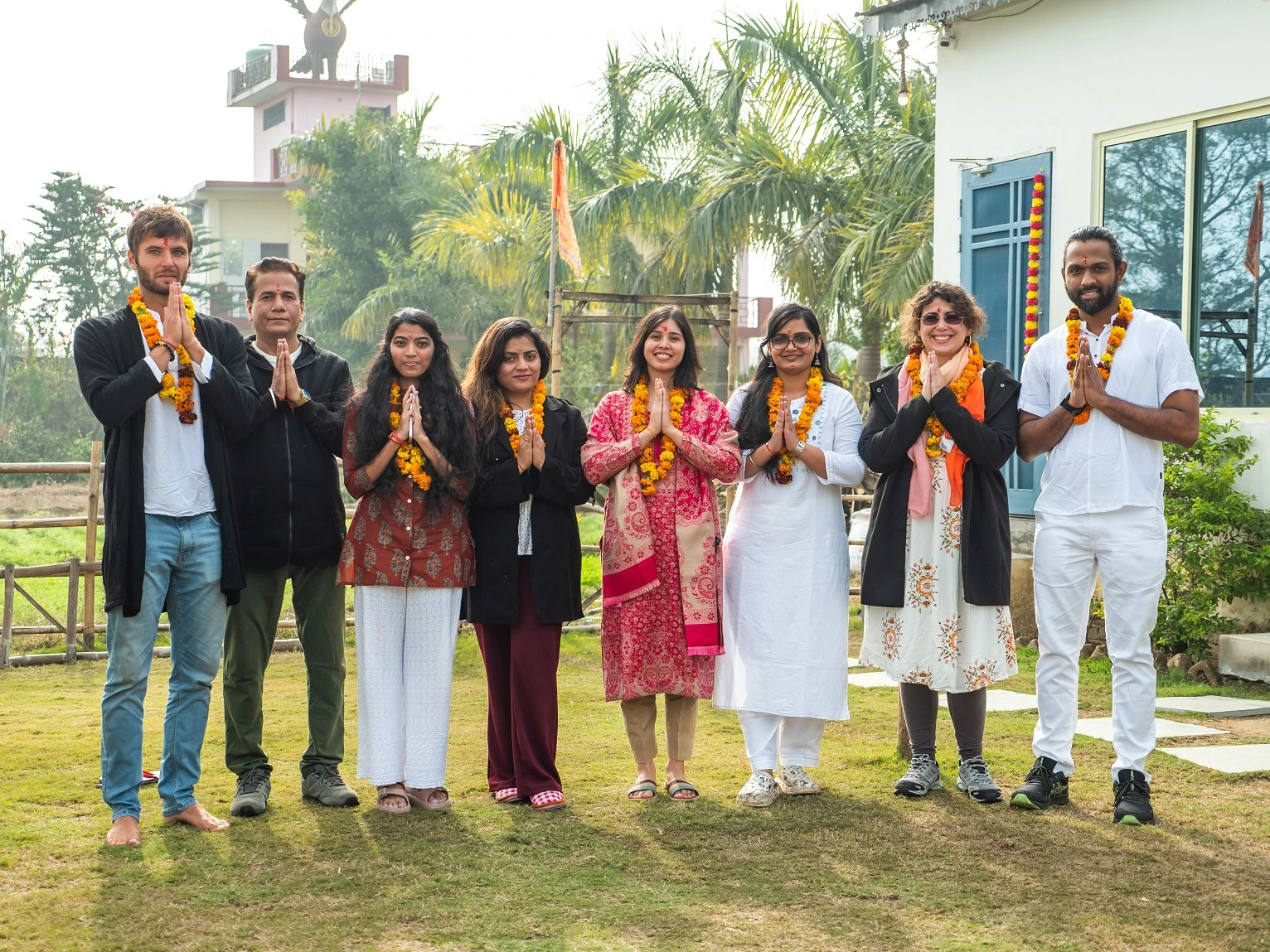
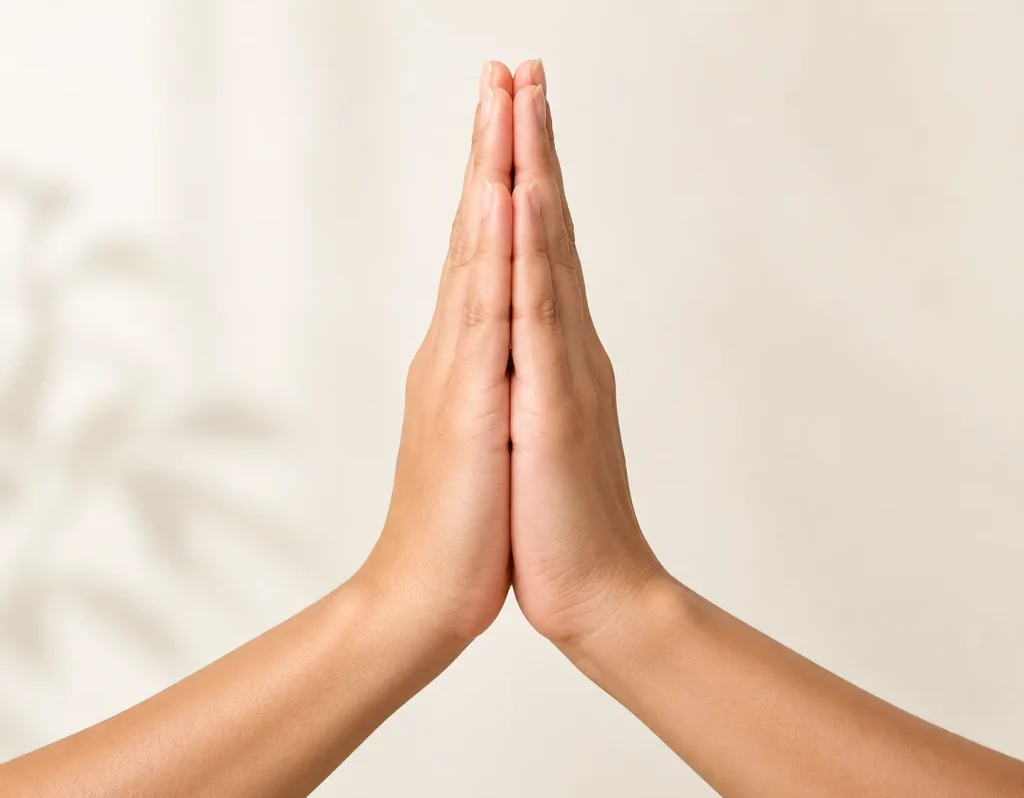 Anjali Mudra is created by placing your palms together in front of your heart with fingers pointing upward. Also known as the Namaste gesture, it helps calm the mind, improve focus, encourage gratitude, and support emotional balance. It is commonly used at the beginning and end of yoga practice.
- Centers the mind and signals the body to shift into receptive practice mode
- Balances the left and right sides of the body and nervous system
- Activates Anahata chakra for emotional openness and compassion
- Reduces blood pressure through bilateral stimulation at the sternum
4. Vayu Mudra
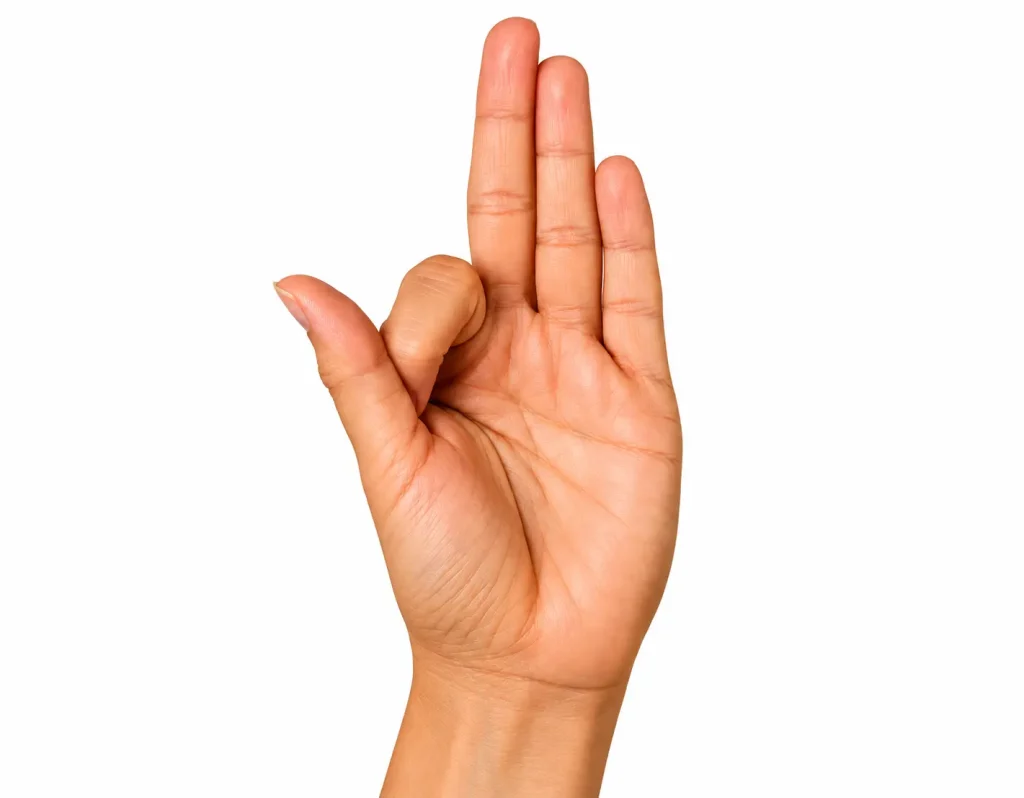
Vayu Mudra is formed by gently folding the index finger to the base of the thumb and pressing it with the thumb, while the other fingers remain straight. It helps calm the air element (Vata), reducing anxiety, restlessness, and racing thoughts. Practice for 10 to 15 minutes with slow, deep breathing.
- Calms restlessness and racing mental activity caused by excess air element
- Reduces joint pain and gas-related discomfort through Vata regulation
- One of the most targeted mudras for nervous system anxiety patterns
- Works fastest when paired with a 4-count inhale and 8-count exhale
5. Apana Mudra
 Apana Mudra is formed by touching the tips of the middle finger, ring finger, and thumb together while keeping the other two fingers straight. It supports healthy digestion, metabolism, and natural detoxification. Practice for 15 to 45 minutes, especially in the morning, with slow, mindful breathing.
- Supports healthy digestion, elimination, and metabolic function
- Reduces bloating, constipation, and digestive discomfort
- Activates the earth and space elements to ground downward energy
- Particularly effective for practitioners with Kapha imbalance patterns
Yoga Mudras for Blood Pressure Support
The best yoga mudras for blood pressure are Apana Vayu Mudra and Gyan Mudra. A 2020 study in the International Journal of Health Sciences and Research found that Apana Vayu Mudra lowered mean systolic blood pressure from 145.67 to 133.13 mmHg. This change happened in hypertensive patients after three days of regular practice, twice a day.
Both mudras activate the vagus nerve by stimulating the fingertips and promoting long exhales. This reduces peripheral vascular resistance and lowers cardiac output through parasympathetic dominance.
1. Apana Vayu Mudra for High Blood Pressure
Fold the index finger inward to rest its tip at the base of the thumb. Bring the tips of the middle and ring fingers to meet the thumb tip. Extend the little finger straight. Rest both hands on your knees with palms upward. Breathe with a 4-count inhale and an 8-count exhale. Hold for 15 minutes.
The extended exhale ratio is the mechanism, not decoration. It triggers vagal activation and reduces peripheral arterial resistance within a single session. Practice twice daily for sustained blood pressure support across a full week.
2. Gyan Mudra for Stress-Driven Blood Pressure
When blood pressure elevation is stress-driven rather than structural, Gyan Mudra is the most appropriate daily tool. Cortisol is the upstream cause of sustained hypertension in stress-reactive patterns.
Gyan Mudra combined with slow pranayama reduces cortisol within 10 to 15 minutes of practice, which brings blood pressure down through the hormonal pathway rather than the vascular one. Practice every morning before your first meal for compounding effects across the week.
Learn Yoga Mudras Properly at Ekam Yogashala
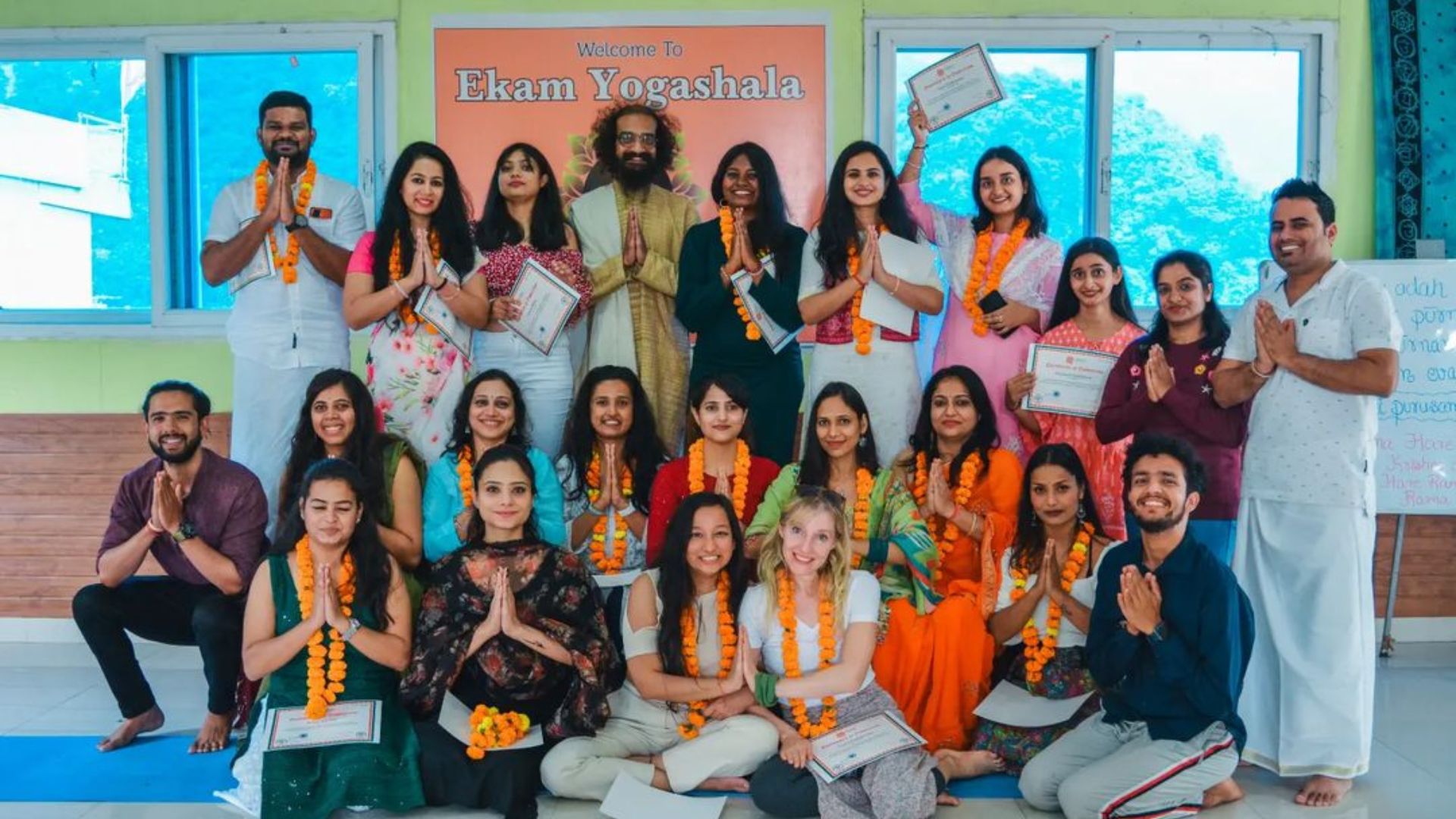
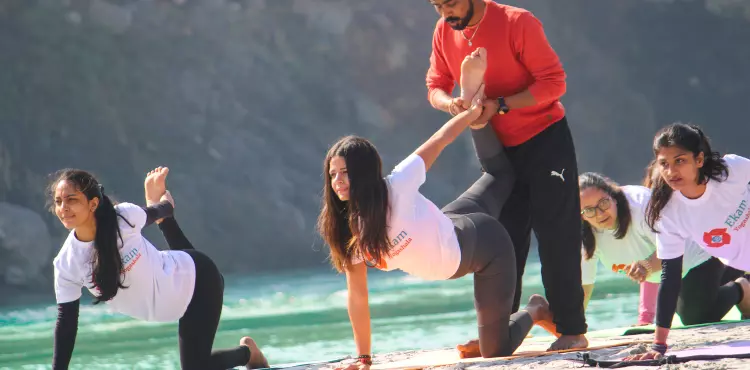
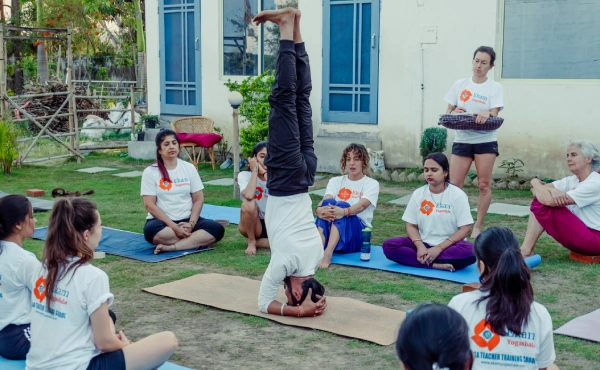
Reading about mudras gives you the concept. Learning mudras in a structured residential program allows for practice and correction. This helps you understand how mudras connect to the broader yoga system. As a result, they become genuinely effective instead of just being casually tried.
Ekam Yogashala is a Yoga Alliance USA-registered school with programs in Rishikesh. Over 2,000 students from the US, UK, Europe, and Asia have trained here. Each program includes mudra and pranayama practice daily. It also covers Hatha and Ashtanga Yoga, anatomy, yogic philosophy, and supervised teaching methods. Small batches of 10 to 15 students ensure that each student learns the mudra technique with direct teacher feedback, not just observation.
- 100 Hour Yoga TTC from $450 (Rishikesh), 12 days
- 200 Hour Yoga TTC from $799 (Rishikesh) or $1,199 (Goa), 21 to 24 days
- 300 Hour Yoga TTC from $999 (Rishikesh), 28 days
- Yoga Alliance USA certification, accommodation, and meals are included in all programs
Your Hands Are Already the Tool. Learn How to Use Them
Yoga mudras are simple hand gestures that can support your physical, mental, and emotional well-being. Practicing them daily with slow, mindful breathing helps reduce stress, improve focus, and restore balance. Start with Gyan Mudra for just 10 minutes each morning and experience the benefits through regular, consistent practice.
Want to learn yoga mudras properly from lineage-trained teachers? Ekam Yogashala’s residential programs in Rishikesh integrate mudra, pranayama, and full yoga philosophy into a certified curriculum. Apply now and save $100 on your program.
Frequently Asked Questions
Q1. What is the meaning of mudra in yoga?
Mudra is a Sanskrit word meaning “seal” or “gesture.” In yoga, mudras are deliberate hand positions that direct prana through the body’s energy channels.
Q2. How do hand mudras affect the body?
Hand mudras stimulate nerve endings in the fingertips connected to the vagus nerve, activating the parasympathetic nervous system and reducing stress hormones.
Q3. What are the most common yoga mudras?
Gyan, Prana, Anjali, Vayu, and Apana Mudra are the most commonly practiced. Apana Vayu Mudra is widely used for blood pressure and cardiac support.
Q4. How many types of mudras are there in yoga?
Classical yoga texts identify five types: Hasta (hand), Kaya (body), Mana (head), Bandha (energy locks), and Adhara (perineal) mudras.
Q5. Do yoga mudras have any scientific benefits?
Yes. Peer-reviewed research confirms mudras reduce cortisol, lower blood pressure, activate the vagus nerve, and improve parasympathetic nervous system function.
Q6. What is the difference between mudra and asana?
Asana is a physical body posture practiced for strength, flexibility, and alignment. Mudra is a deliberate gesture, usually with the hands, that redirects pranic energy flow.
Q7. How long should you hold a mudra?
Hold mudras for a minimum of 5 minutes. Optimal physiological effects register between 10 and 15 minutes of consistent, uninterrupted practice with slow breathing.
Q8. What are the best mudras for anxiety and stress relief?
Gyan Mudra and Vayu Mudra are the most effective for anxiety. Gyan calms mental chatter. Vayu targets restlessness and nervous system overactivation directly.
Q9. Which mudras help improve digestion and metabolism?
Apana Mudra is the primary digestive mudra in yogic science. It supports elimination, reduces bloating, and activates downward energy flow for metabolic function.
Q10. How to perform the Gyan Mudra step by step?
Touch the index fingertip to the thumb tip. Extend the other three fingers. Rest hands on knees, palms up. Breathe slowly and hold for 10 to 15 minutes.