Most people joining a 200-hour yoga teacher training in Rishikesh know about asana and pranayama. Mudras get less attention before the course begins, yet every experienced teacher knows they are woven through the entire curriculum. The real question is not whether they are taught. The important questions are when, how, and why mudras appear in the daily schedule.
This guide breaks that down clearly, week by week, so you know exactly what to expect inside one of the best yoga schools in Rishikesh.
What Is Included in a 200-Hour Yoga Teacher Training Curriculum That Covers Mudras?
A standard Yoga Alliance-certified 200-hour yoga teacher training covers eight core subject areas. Mudra practice does not get a dedicated slot in most curricula. Instead, it appears as a thread running through three subjects: pranayama theory, meditation theory and practices, and energy anatomy.
At Ekam Yogashala, the 24-day residential course includes the core text “Asana Pranayama Mudra Bandha” by Swami Satyananda Saraswati as a required study reference. That alone signals how central mudra is to the training, rather than being an afterthought.
The subject areas in which mudra knowledge is directly relevant are:
- Pranayama theory and practice
- Meditation theory and practices
- Yoga philosophy (introduction to chakras, energy anatomy)
- Teaching methodology
Are Mudras Taught in Yoga Teacher Training Courses? What the Yoga Alliance Curriculum Says
Yes, mudras are taught in yoga teacher training courses, and Yoga Alliance-certified schools may address them as part of energy and subtle body studies. Yoga Alliance requires schools to cover a wide range of curriculum areas. However, whether to include energy anatomy is up to each school’s program. Mudra practice can fall within that framework because some hasta mudras (hand gestures) are traditionally associated with pranic pathways or chakras.
What varies between schools is depth. A school that treats mudras as a five-minute add-on at the end of a meditation class is different from one that connects each gesture to breath mechanics, yoga anatomy, and philosophy. At Ekam Yogashala, we explain mudras based on prana flow, the five elements, and their link to specific chakras. This gives students a practical teaching framework for their own classes.
What Week Are Mudras Introduced in Yoga Teacher Training?
Mudras are introduced in Week 2 of a 200-hour yoga teacher training in Rishikesh, once pranayama foundations are firmly in place.
Week 1 (Days 1 to 7): Building the Foundation
Mudra is introduced as a concept, not a practice. Theory sessions on pranayama and Hatha Yoga briefly cover what mudras are and how they relate to prana. Students learn the vocabulary before they use it.
Week 2 (Days 8 to 14): First Mudras in Pranayama Class
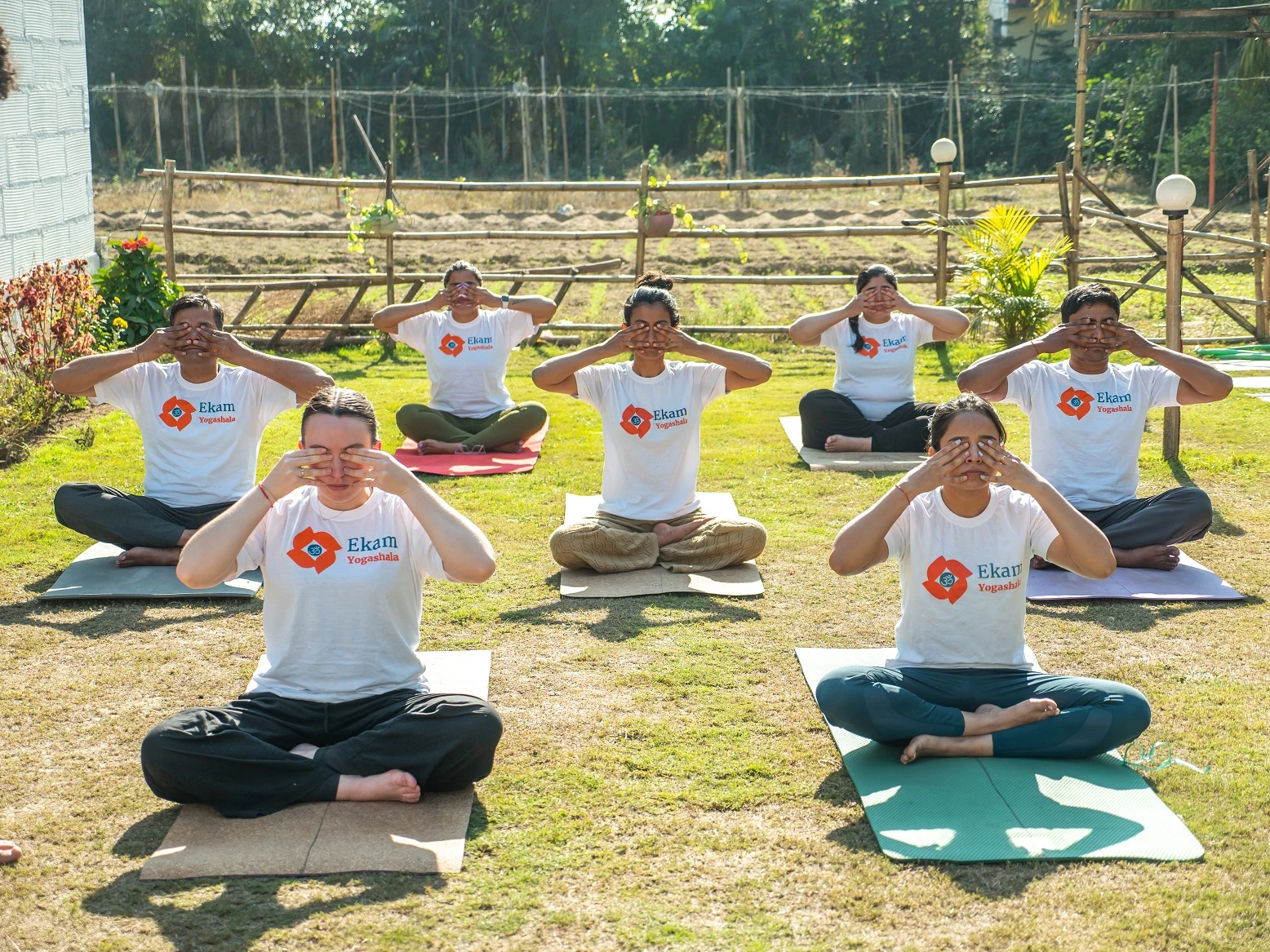
This is when hand mudras in yoga are formally practiced. Chin Mudra and Jnana Mudra appear in the 7:45 AM pranayama session, paired directly with Nadi Shodhana and Ujjayi breathing. The gesture and the breath become one instruction, not two.
Week 3 (Days 15 to 21): Mudras Meet Chakra and Meditation Studies
As chakras introduction and energy anatomy deepen in yoga philosophy class, mudra practice expands to match. Prana Mudra, Apana Mudra, and Dhyana Mudra are added to morning and evening meditation sessions. Students begin to feel the energetic shift, not just perform the gesture.
Week 4 (Days 22 to 24): Teaching Mudras to Others
Teaching methodology sessions focus on how to cue, sequence, and explain yoga mudra inside a real class. Students take turns giving mudra instructions. This helps them gain confidence for their first classes after certification.
Throughout the Course: Mudra as a Daily Practice
Mudra does not stay contained to one class slot. By Week 3, students encounter it across pranayama, meditation, philosophy, and Yoga Nidra sessions within a single day. That repetition across contexts helps students turn mudra from a memorized gesture into knowledge they can use in their teaching.
How Mudras Are Taught Alongside Pranayama in YTT at a Yoga School in Rishikesh
The connection between mudra and pranayama is not incidental. In traditional yoga, pranayama and mudra were always practiced together. A hand mudra in yoga creates a circuit that prevents prana from dispersing through the fingertips. When you hold Chin Mudra (with the index finger and thumb touching) during Nadi Shodhana, you are not sitting still with your hands in a particular position. You are actively supporting the inward movement of breath and awareness.
At a high-quality yoga teacher training in Rishikesh, teachers explain prana and breath mechanics before students ever hold a mudra. Understanding comes first. The gesture follows. That sequence is what separates a teacher from someone who copies a hand position.
The most common types of mudras in yoga introduced during YTT alongside pranayama include:
- Chin Mudra and Jnana Mudra for concentration and meditation
- Nasagra Mudra for Nadi Shodhana (alternate nostril breathing)
- Prana Mudra for energy activation
- Apana Mudra for grounding and cleansing
- Dhyana Mudra for deepening seated meditation
Inside the Curriculum: What You Will Actually Learn Week by Week in Yoga School
Most published YTT schedules show subject headings. What students actually want to know is what a typical day looks like when mudras are being taught. At Ekam Yogashala, the daily itinerary during Weeks 2 and 3 typically unfolds like this:
- 6:00 AM: Hatha Yoga (asana practice; mudras appear in meditative asana sequences)
- 7:45 AM: Pranayama and mantra (primary slot for hand mudra in yoga instruction)
- 10:30 AM: Asana alignment and adjustment (bandha awareness linked to mudra)
- 12:00 PM: Yoga anatomy (how mudra affects the nervous system and respiratory system)
- 3:00 PM: Yoga philosophy (chakras introduction, energy anatomy, mudra within the subtle body framework)
- 6:00 PM: Meditation and Yoga Nidra (Dhyana Mudra held throughout seated practice)
This integration means students experience mudra six times in one day. They see it in different contexts, which helps them understand better.
Is Mudra Practice Mandatory in Yoga Alliance Courses? What Yoga Alliance Certification Requires
Mudra practice is not listed as a standalone mandatory module in the Yoga Alliance 200-hour standards. However, energy anatomy, including the study of prana, nadis, and the subtle body, is a required area. Because mudras are one traditional method of working with prana, a school that covers energy anatomy in depth may include mudra instruction, but the standards do not require it. A school that skips mudra entirely may therefore leave a gap in its treatment of energy anatomy.
The more practical answer is this: you do not need to know mudras before you arrive. A solid 200-hour yoga teacher training course in Rishikesh will start with the basics. You will gain the skills to teach common mudra sequences confidently and accurately.
Mudra Benefits Students Learn to Teach During a 200-Hour YTT in Rishikesh
Understanding mudra benefits is one part of the curriculum. Being able to communicate those benefits to future students is another. In Week 4, teaching methodology sessions focus on introducing yoga mudra. They aim to explain it clearly, keeping it connected to physical practice.
The mudra benefits covered across the curriculum include:
- Directing prana toward specific organs and energy centers
- Supporting concentration and inward focus during meditation
- Activating or calming the nervous system depending on the gesture
- Strengthening the connection between breath mechanics and subtle awareness
- Grounding the mind during longer pranayama practices
Students also learn that mudra benefits are cumulative. A single session of Chin Mudra during pranayama creates a noticeable shift in focus. With regular practice over weeks, students can maintain this focus in every class they teach after certification.
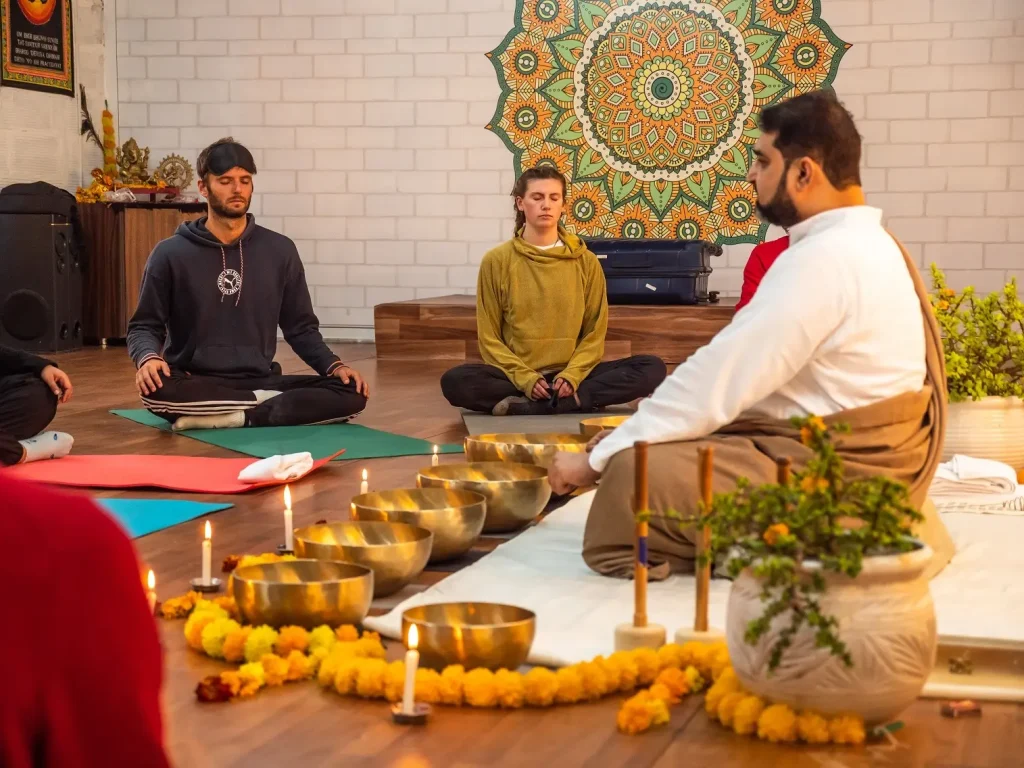
Ready to Learn Mudras, Pranayama, and the Full YTT Curriculum in Rishikesh?
At Ekam Yogashala, a Yoga Alliance-certified school in Rishikesh, students learn mudras through focused, practical instruction. With batches limited to 14 students, teachers provide individual corrections and guidance. The curriculum connects mudras with pranayama, meditation, yoga philosophy, and the flow of prana.
The 200 Hour Yoga Teacher Training Course includes Asana Pranayama Mudra Bandha by Swami Satyananda Saraswati. Experienced faculty help beginners confidently learn and teach mudras. Courses run monthly through 2027, starting at $999, with limited seats. View the latest Dates and Reserve Your Seat at Ekam Yogashala.
Frequently Asked Questions
Q1. When are mudras taught in 200-hour yoga teacher training?
Mudras are formally introduced in Week 2, woven into pranayama and meditation sessions throughout the rest of the course.
Q2. Are mudras included in the 200-hourYTT curriculum?
Yes, mudras appear in energy anatomy, pranayama practice, and meditation modules within Yoga Alliance-certified programs.
Q3. Is mudra practice mandatory in Yoga Alliance-certified courses?
Energy anatomy may be included in a 200-hour curriculum, and mudra practice may form part of that subject area.
Q4. Do you need to know mudras before joining a yoga teacher training course?
No prior knowledge is needed. Instruction starts with the basics and builds practical teaching ability over 24 days.
Q5. How many mudras are taught during a 200-hour YTT in Rishikesh?
Most quality programs introduce 5 to 10 core hasta mudras, covering their purpose, technique, and classroom application.
Q6. How are mudras taught alongside pranayama in YTT?
Teachers pair each hand gesture with a specific pranayama technique, explaining prana direction and the breath-mudra relationship together.
Q7. What is the best yoga school in Rishikesh for learning mudras in depth?
Ekam Yogashala includes the Asana Pranayama Mudra Bandha text and integrates mudra practice daily into its pranayama, philosophy, and meditation modules.
Q8. What mudra benefits will I learn to teach after 200-hour YTT?
You will learn to use mudra practice to guide prana, regulate the nervous system, support the breath, and cultivate focused awareness.