Most people who practice pranayama breathing are doing half the work. The breathwork itself is powerful on its own. But the classical yoga tradition never taught pranayama in isolation. It matched each main breathing practice with a hand gesture, or mudra. This gesture directs prana through the body’s energy channels and boosts the impact of every breath.
This guide shows how the combination works. It details which mudra pairs with which pranayama. You’ll also learn how to start using both in your next practice session. There is a measurable physiological explanation for why pranayama breathing with mudras works better than breathwork alone. Understanding that explanation changes how you practice and how quickly you feel the results.
What Are Mudras and How Do They Work With Pranayama Breathing
Mudras are specific hand gestures in yoga. They connect fingertips to certain nerve endings in the palm, creating energetic circuits in the body. The human hand occupies a disproportionately large area of the brain’s sensory and motor cortex.
A 2026 review in The Hitavada found that where you place your fingers sends clear neural signals. These signals affect attention, emotional control, and prana flow. When you use pranayama breathing with mudras, they strengthen the nervous system’s response. This also helps keep prana from fading during practice.
Classical yogic texts, such as the Hatha Yoga Pradipika and the Gheranda Samhita, describe mudras as vital partners to pranayama. They aren’t just optional. The word “mudra” means “seal” in Sanskrit.
The seal does exactly what its name suggests: it keeps the prana that pranayama moves inside the subtle body and prana flow network, so it doesn’t escape outward. Mudra benefits build up from this containment. They create focus, calm, and greater breath awareness. These effects develop more slowly with pranayama alone.
Best Mudras to Use During Pranayama Exercises
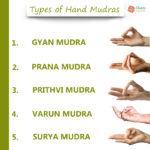
What is the best mudra for deep breathing exercises? The best mudras to use during pranayama exercises depend on the pranayama being practiced. Gyan Mudra suits calm meditative breathwork. Prana Mudra suits energizing practices. Chin Mudra suits grounding breath. Each pairing is specific because each mudra works on a different element and energy channel.
Combining mudra yoga with your pranayama practice does not require changing your breath technique. It requires holding one deliberate hand position throughout that amplifies exactly what your breathwork is already doing.
1. Gyan Mudra With Nadi Shodhana
Gyan Mudra with pranayama Nadi Shodhana is the foundational pairing for mental clarity and anxiety relief. Touching the index fingertip to the thumb connects air to fire, quieting mental scatter while the alternate nostril breath balances both brain hemispheres simultaneously.
- Form Gyan Mudra on the non-dominant hand and hold it throughout the entire session
- Inhale through the left nostril for 4 counts, retain for 4, and exhale through the right for 8
- Keep the Gyan Mudra position firm but not tense across all rounds
- Practice for 5 to 10 minutes daily to build a conditioned calming response
- At the end, hold both hands in Gyan Mudra for 2 minutes of silent integration
- Results in measurably reduced anxiety and improved breath awareness within two weeks
2. Prana Mudra With Kapalbhati
Prana Mudra connects the ring and little fingertips to the thumb, activating earth and water elements to replenish prana. When paired with Kapalbhati, it boosts organ stimulation and circulation. This makes the energizing effects much stronger than breathwork done with hands resting passively.
- Form Prana Mudra on both hands before beginning Kapalbhati
- Keep the mudra held without tension throughout all rounds
- Practice 3 rounds of 30 to 60 rapid exhales with Prana Mudra engaged
- Rest between rounds with hands in Prana Mudra on the knees
- Ideal for morning practice to replenish prana after overnight fasting
3. Chin Mudra With Ujjayi Breath
Chin Mudra mirrors Gyan Mudra but is held with palms facing downward, shifting the quality from receptive to grounding. When paired with Ujjayi pranayama, it anchors the ocean-breath exhale. This helps keep the heat and focus generated by Ujjayi from fading away.
- Rest both hands on knees with palms down, index to thumb forming the mudra
- Begin Ujjayi by constricting the back of the throat slightly on both inhale and exhale
- Hold Chin Mudra throughout, releasing only when the session ends
- Practice during asana sequences where Ujjayi breath is sustained across multiple postures
- Specifically effective for managing heat and maintaining focus in dynamic yoga practice
4. Vayu Mudra With Bhramari
Vayu Mudra folds the index finger to the base of the thumb, reducing the air element and calming mental restlessness. Paired with Bhramari pranayama, the humming vibration activates the vagus nerve. Meanwhile, the mudra targets the excess air energy that causes anxiety.
- Fold the index finger to the base of the thumb and press gently with the thumb pad
- Hold on both hands throughout the Bhramari session
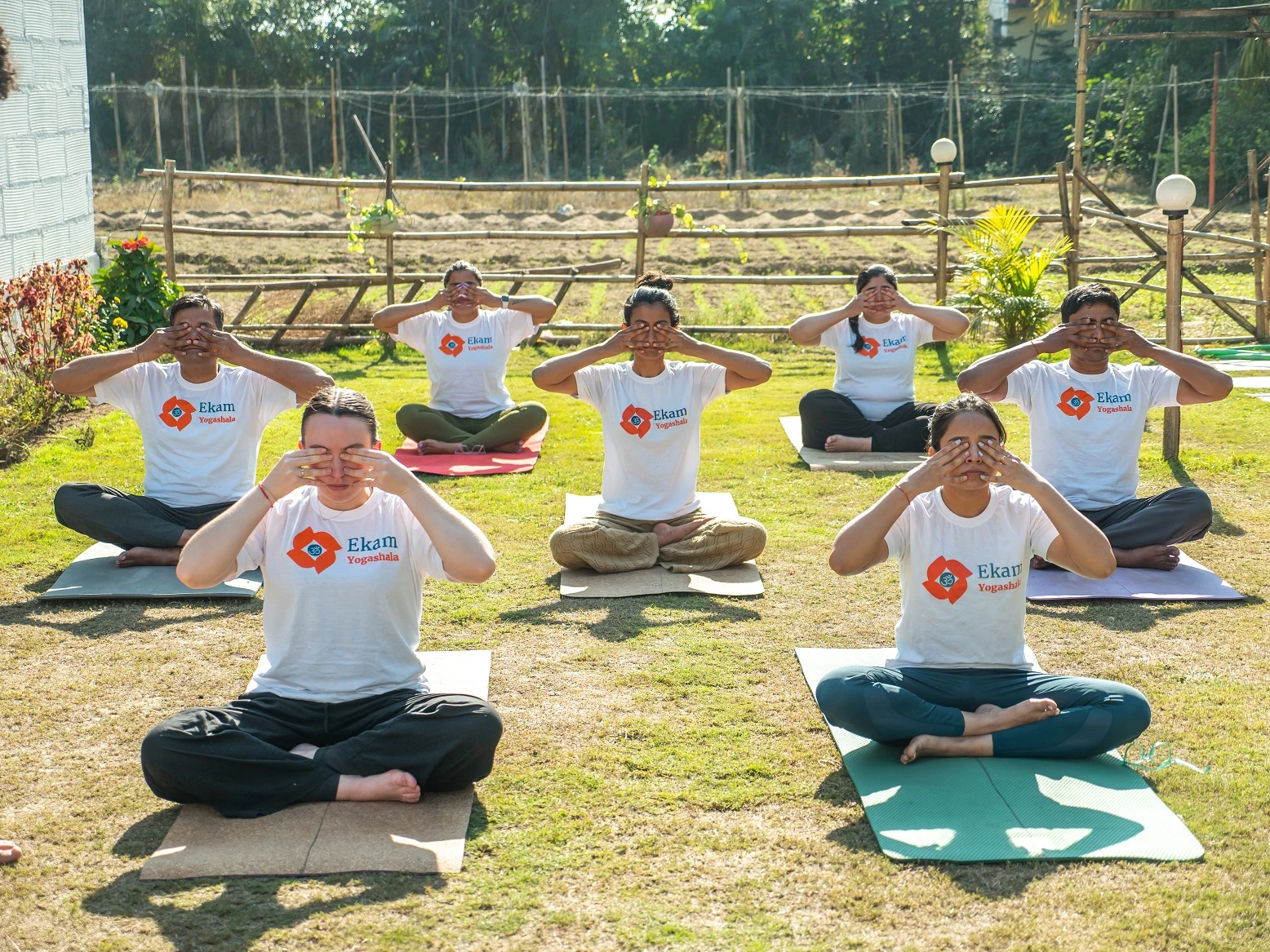
- Inhale fully, close ears with thumbs and eyes with fingers, hum on the exhale
- Practice 5 to 7 rounds for acute anxiety relief within a single session
5. Dhyana Mudra With Yoga Nidra Breathwork
Dhyana Mudra involves placing both hands in the lap. The right hand rests on the left, and the thumbs touch. This position helps balance all five elements at once. Yoga Nidra’s slow, deep breathing provides the deepest parasympathetic rest. This effect surpasses any combination of mudras and pranayama.
- Place both hands in the lap, right palm resting on left with thumbs just touching
- Hold this position from the beginning of the practice without adjusting
- Breathe slowly, extending the exhale to twice the length of the inhale
- Practice in Savasana or seated meditation for 10 to 20 minutes
How Do Mudras Affect the Nervous System During Breathwork
Mudras activate reflex points in the fingertips connected to the autonomic nervous system. During pranayama exercise, they help shift from sympathetic to parasympathetic mode. This reinforces the neural signal that breath is already sending to the brain.
- Each finger corresponds to one of the five elements governing the body in yoga philosophy and energy anatomy.
- Thumb represents fire, index finger represents air, middle finger represents ether, ring finger represents earth, little finger represents water.
- When specific fingers connect, they modulate the balance of their corresponding elements in the body.
- Fingertip nerve density is exceptionally high, meaning sustained pressure at specific points influences neural activity across the entire hand region of the cortex.
- Both the classical yogic view and neuroscience show the same result: the body reacts differently when hands are placed intentionally during breathwork.
- Mudra and breathwork together reduce anxiety better than pranayama breathing on its own.
Learn the complete mudra and pranayama breathing system in person at Ekam Yogashala, Rishikesh. Apply for the next batch or call +91 75000 70828!
Which Hand Mudra Is Best for Anxiety and Stress Relief
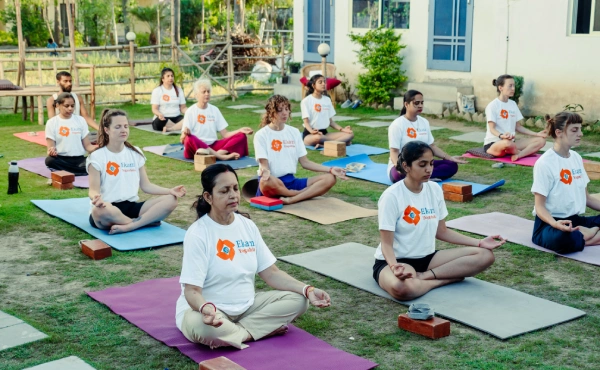
Gyan Mudra paired with Bhramari pranayama is the most direct combination for anxiety. The humming sound of Bhramari stimulates the vagus nerve. This helps the nervous system relax into a parasympathetic state.
Gyan Mudra held throughout deepens this shift by reinforcing the neural calming signal through the fingertip circuit. Practicing this combination for five minutes every day can lower cortisol levels. You’ll see results in two to three weeks of regular practice.
Step-by-Step Guide to Mudras and Pranayama for Beginners
Here is the step-by-step guide to mudras and pranayama for anyone starting from scratch. The combination for beginners is Gyan Mudra with pranayama Nadi Shodhana practice.
- Sit in a comfortable upright position, Sukhasana or on a chair with spine straight.
- Rest the left hand on the left knee and form Gyan Mudra, index fingertip to thumb tip, other three fingers extended.
- Raise the right hand to the face for Nadi Shodhana, using the thumb to close the right nostril and the ring finger to close the left.
- Inhale through the left nostril for 4 counts, close both nostrils and retain for 4 counts, exhale through the right nostril for 8 counts.
- Reverse the pattern, inhaling right, retaining, exhaling left.
- Continue for 5 to 10 minutes, keeping the left hand in Gyan Mudra throughout without releasing.
- At the end of the session, lower both hands and sit for 2 minutes with both hands in Gyan Mudra before opening the eyes.
How Mudras Enhance Pranayama Benefits Over Time
Mudras create consistent energetic circuits that prevent prana from dissipating after the pranayama session ends. This is the importance of mudras in yoga that most beginner resources skip. The benefits of pranayama practice accumulate session by session. Adding mudras speeds up this buildup. Each session creates a stronger energy imprint in the subtle body and prana flow network.
With weeks of practice, the nervous system starts to enter the parasympathetic state faster when the mudra is formed. This happens even before the breath practice begins. This conditioned response is one of the most useful results of long-term practice of combining mudras with pranayama.
The mudra becomes an anchor. Forming Gyan Mudra on its own, without a formal pranayama session, activates the neural links created from weeks of practice. Experienced practitioners can use a mudra in stressful moments. This helps them quickly find a calmer state, without a full 10-minute breathwork session.
Learn Pranayama and Mudras at Their Source. Ekam Yogashala, Rishikesh.
Master traditional Hatha Yoga, pranayama, and energy anatomy with Ekam Yogashala’s 200 hour yoga teacher training course. Earn your Yoga Alliance certification in intimate classes capped at 14 students. All-inclusive packages start at $799 with private or shared accommodation and all daily meals included. Elevate your practice and unlock your teaching potential. Apply for the next batch today!
Frequently Asked Questions
Q1. What are mudras and how do they work with pranayama?
Mudra yoga uses precise finger positions to create energetic circuits that direct prana through the body. Combined with pranayama, mudras deepen the nervous system response and amplify every breath’s effect.
Q2. What is the best mudra for deep breathing exercises?
Gyan Mudra with pranayama is the best starting point. It connects air and fire elements. It boosts mental clarity and improves breath awareness during Nadi Shodhana and Bhramari practice.
Q3. How do mudras affect the nervous system?
Mudras stimulate nerve endings in the fingertips. This sends steady signals to the brain’s sensory cortex. These signals help shift from pranayama breathing to parasympathetic rest mode.
Q4. What happens when you combine mudras with breathwork?
The mind settles more quickly. Prana stays focused instead of spreading out. The mudra benefits grow with each session, helping the body learn a calming response that it can access easily.
Q5. Which mudra is best for anxiety and stress relief?
Gyan Mudra and Prana Mudra paired with Bhramari pranayama is the most direct combination. The humming breath activates the vagus nerve while the mudra reinforces the neural calming signal.
Q6. How long should you hold a mudra during pranayama?
Hold the mudra for the entire pranayama exercise session, typically 5 to 15 minutes. Releasing and reforming it during the session interrupts the energetic circuit the mudra is building.
Q7. Can beginners combine mudras and pranayama from the start?
Yes. The mudra and pranayama combination for beginners is Gyan Mudra with Nadi Shodhana. It requires no prior experience and can be practiced safely from the very first session.