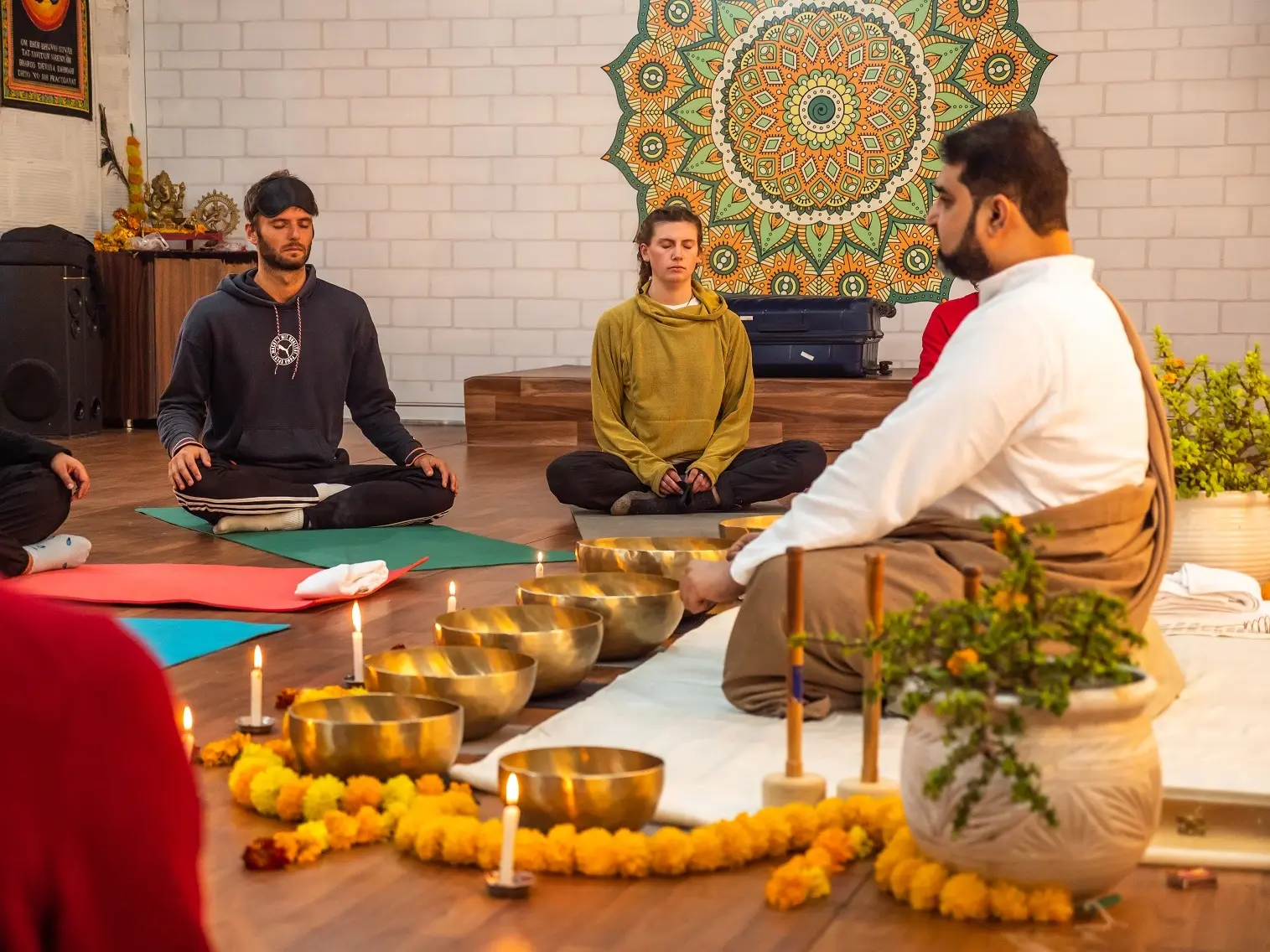
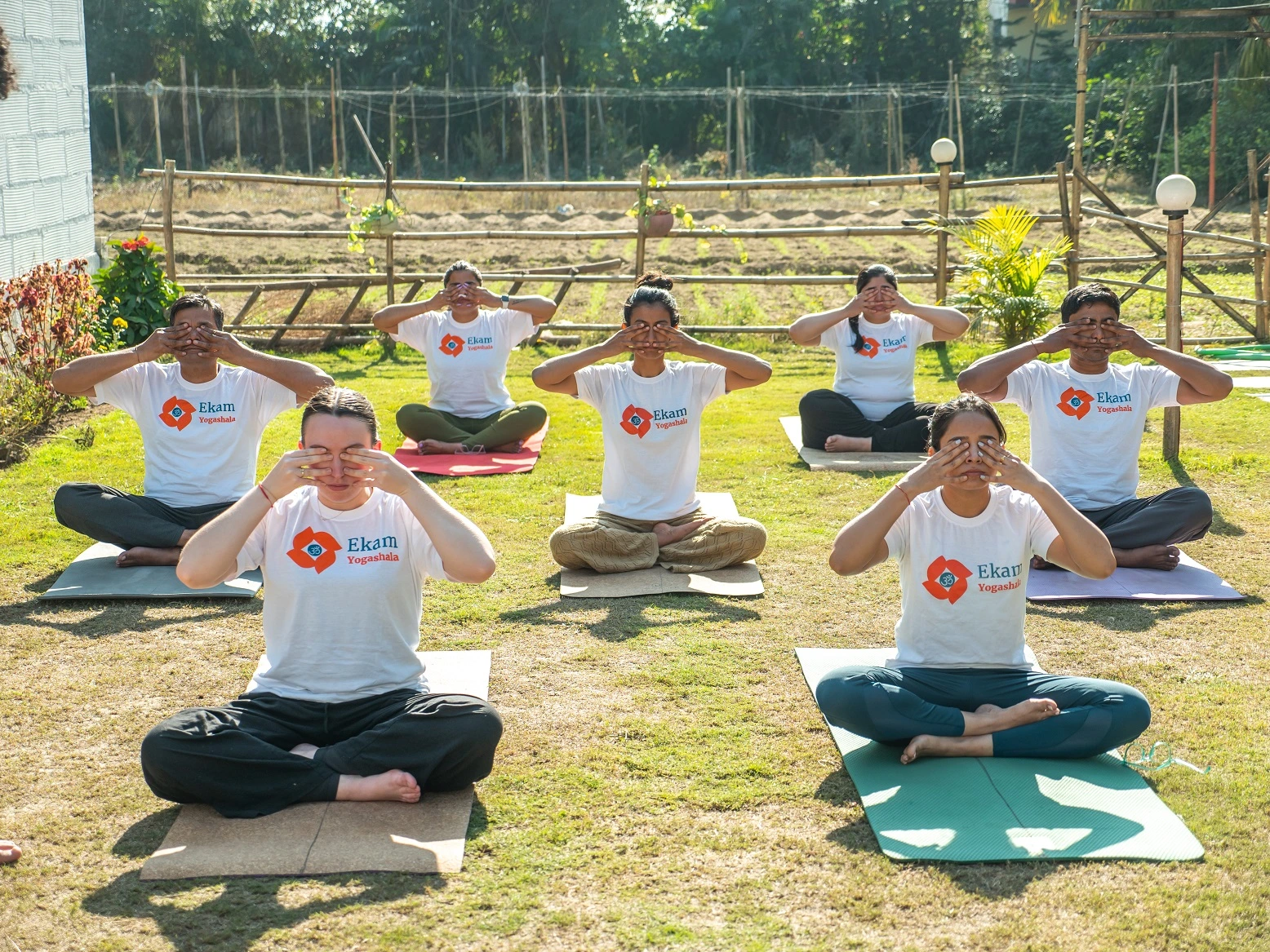
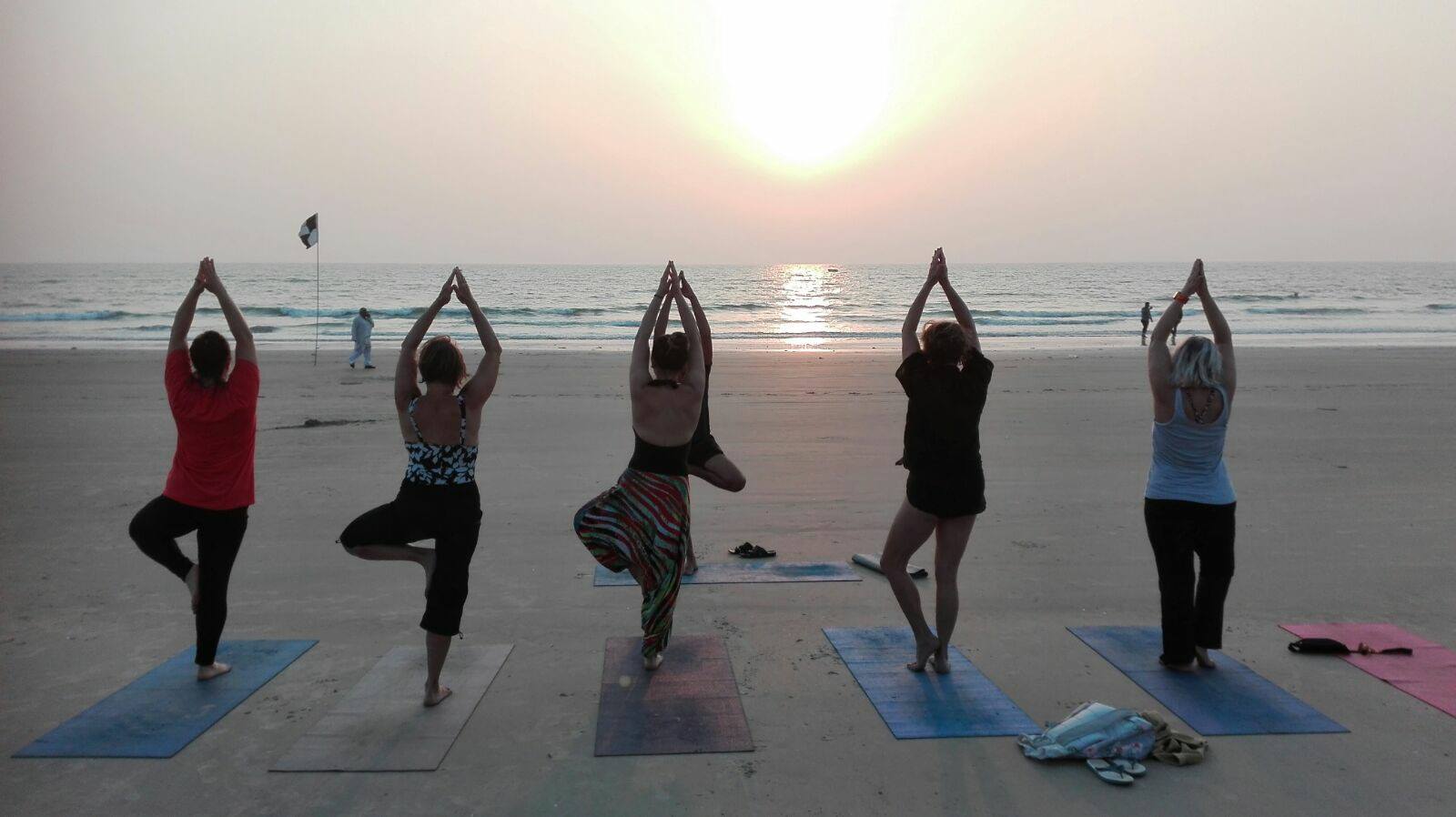
Your blood pressure does not care that you came to Goa for transformation. The 5:30 AM starts, back-to-back asana sessions, and emotional intensity of a residential YTT push your nervous system harder than most people expect. Without the right tools built into your daily rhythm, stress and BP climb quietly in the background. Yoga mudras for blood pressure are those tools. They are fast, require nothing but your hands, and work directly on the same nervous system pathways that intensive training taxes. This is how you use them during your Goa YTT.
What Happens to Your Body During a Residential YTT and Why It Matters
The best way to manage blood pressure during yoga teacher training is to combine mudra practice, pranayama, a sattvic diet, and enough rest into a daily routine. Intense asana sessions can raise blood pressure during practice. Without proper recovery tools, the stress from a 21 to 28-day residential program might worsen BP patterns for students who already have hypertension.
Blood pressure and yoga practice have a nuanced relationship during intensive training. An advanced Ashtanga session will temporarily raise your systolic reading. That is normal and expected. The problem builds when there is no structured recovery between sessions, when an unfamiliar environment disrupts sleep, and when philosophy classes keep the mind activated late into the night. Low-grade sympathetic dominance across the full program is what creates real BP risk.
Hypertension management during YTT is not about slowing down. It is about giving the nervous system what it needs to reset between sessions so you can keep training at full capacity. Yoga hand mudras for BP control fit directly into the rest periods already built into every YTT schedule. No extra time. No equipment. Just the hands you already have.
Which Mudra Is Best for Controlling Blood Pressure
The best mudra for controlling blood pressure is Apana Vayu Mudra, also known as Mritsanjeevani Mudra. A 2020 peer-reviewed study showed it lowers systolic blood pressure in just three days of regular practice. For daily stress-related BP management, Gyan Mudra combined with extended exhale pranayama is the most reliable long-term tool. Hriday Mudra, Vayu Mudra, and Prana Mudra round out a complete daily protocol for YTT students.
1. Apana Vayu Mudra
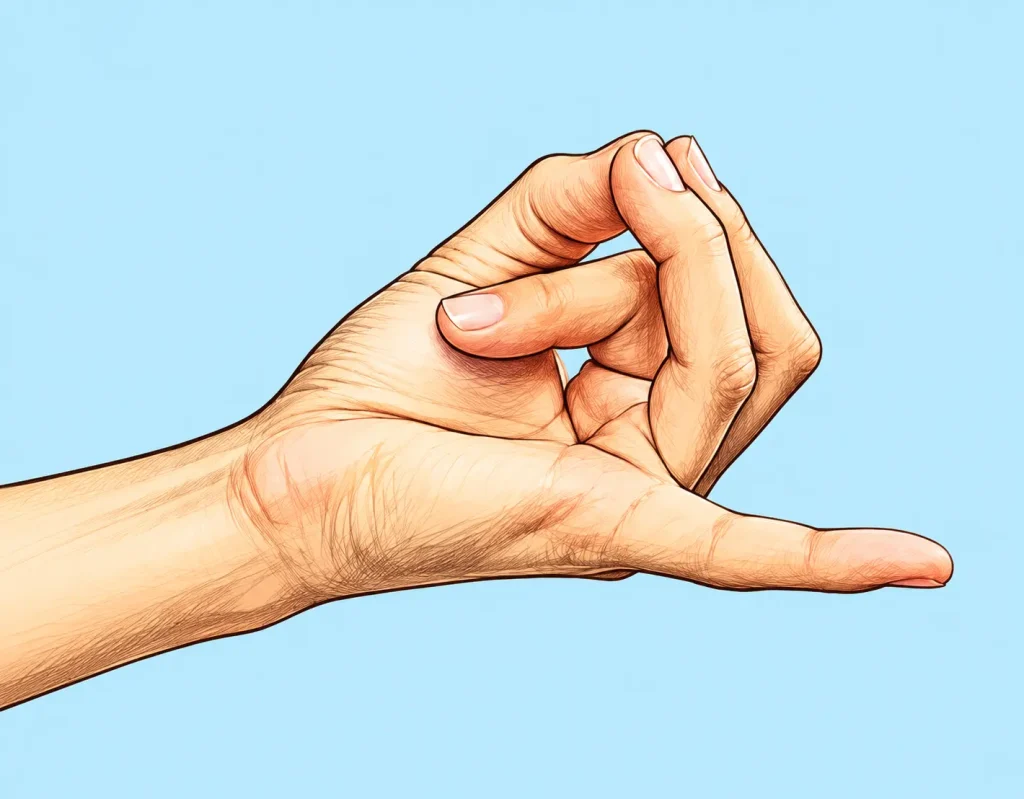
Apana Vayu Mudra (Mritsanjeevani Mudra) is one of the most effective yoga mudras for blood pressure. Fold the index finger to the base of the thumb, join the thumb with the middle and ring fingers, and keep the little finger straight. Practice for 15 minutes twice daily with slow, deep breathing to promote relaxation and heart health.
- Reduces acute blood pressure spikes after intense asana sessions
- Strengthens heart muscle function through earth element activation
- Activates the parasympathetic nervous system within a single session
- Clinically confirmed to reduce systolic BP within three days of consistent use
2. Gyan Mudra
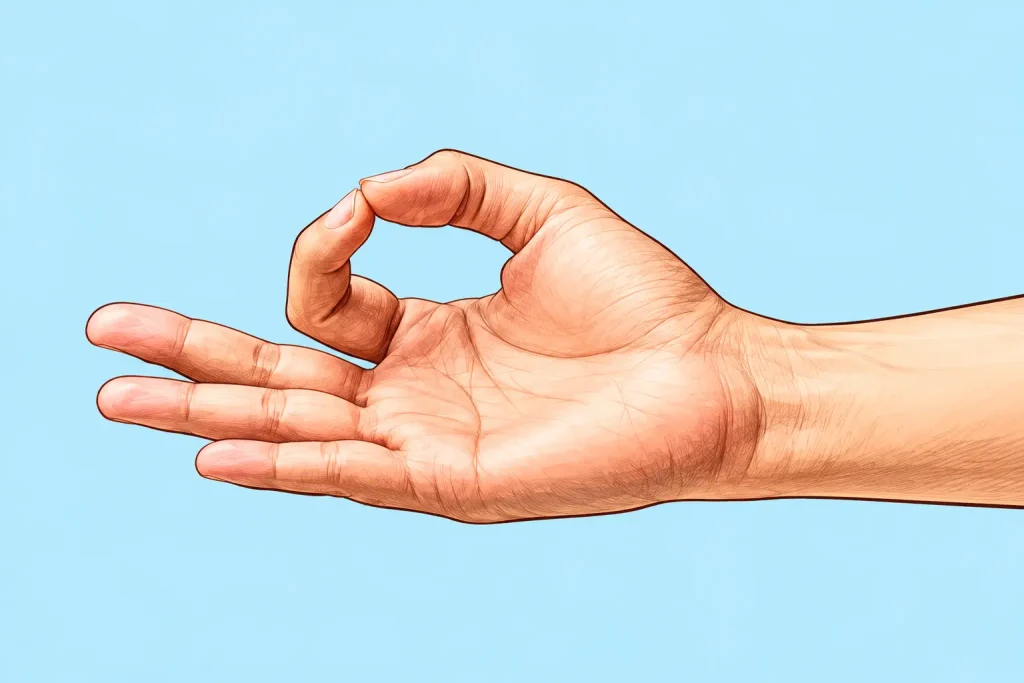
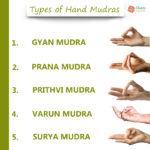
Gyan Mudra is one of the best yoga hand mudras for BP control because it helps reduce stress and calm the mind. Join the tip of the index finger with the thumb and keep the other fingers relaxed. Practice for 15 minutes during pranayama or meditation to support healthy blood pressure and relaxation.
- Reduces stress-driven cortisol that sustains elevated BP across the day
- Sharpens mental focus during philosophy and anatomy sessions
- Activates parasympathetic dominance through air element regulation
- Ideal morning practice to stabilize the nervous system before physical training begins
3. Hriday Mudra
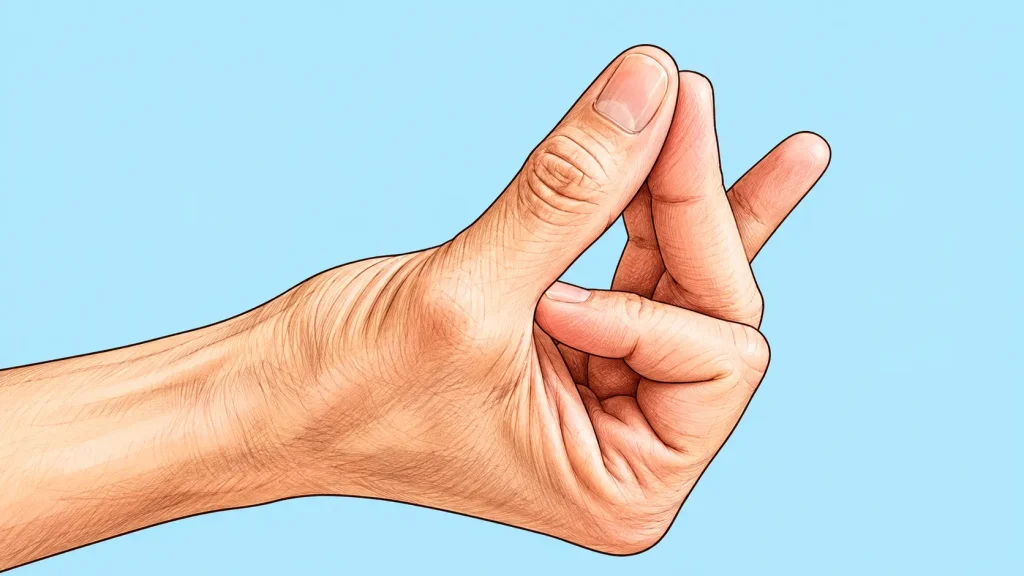
Hriday Mudra supports heart health and healthy blood circulation. Place the index finger at the base of the thumb, touch the thumb with the middle and ring fingers, and keep the little finger straight. Practice for 10 to 15 minutes after your evening yoga session to promote relaxation and support healthy blood pressure.
- Supports heart muscle recovery after sustained physical training
- Improves blood circulation and reduces pressure in the arterial walls
- Channels prana vayu toward the cardiac region for direct heart support
- Best practiced in the evening as a cooldown and nervous system reset
4. Vayu Mudra
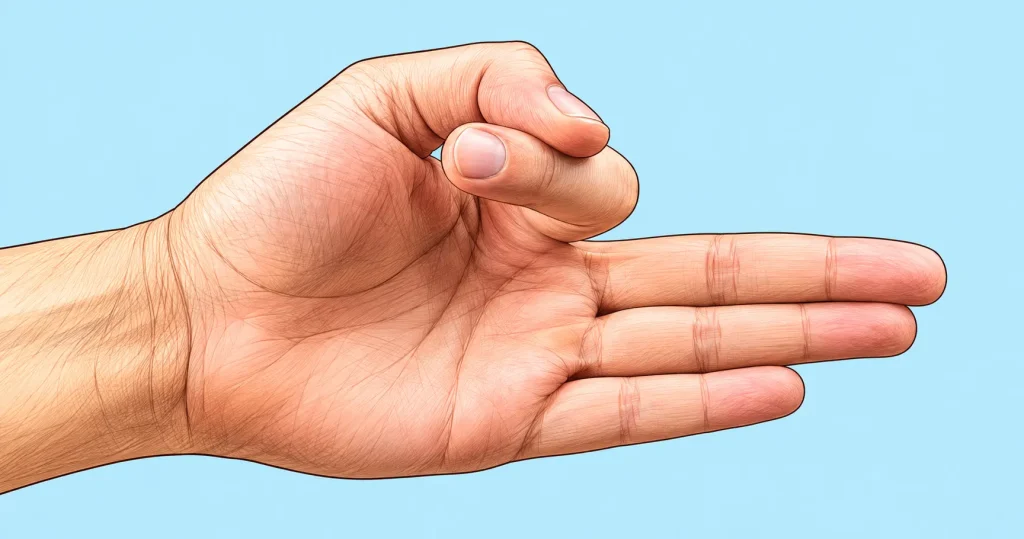
Vayu Mudra helps calm an overactive mind and supports high blood pressure caused by stress or anxiety. Bend the index finger to the base of the thumb and gently press it with the thumb. Keep the other fingers straight. Practice for 10 to 15 minutes with slow breathing to feel calmer and more relaxed.
- Directly calms restlessness and racing thought patterns that spike BP
- Reduces Vata imbalance, the Ayurvedic root of anxiety-driven hypertension
- Works fastest when combined with extended exhale pranayama breathing
- Particularly effective in week one of YTT when nervous system adjustment is highest
5. Prana Mudra
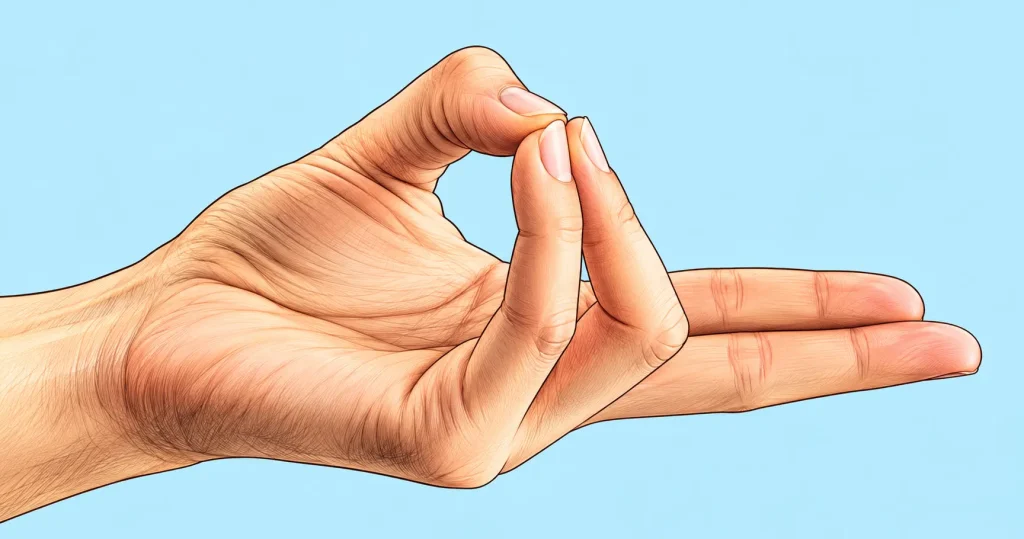
Prana Mudra helps restore energy and supports healthy blood circulation during intense yoga training. Touch the tips of the thumb, ring finger, and little finger together while keeping the index and middle fingers straight. Practice for 15 to 30 minutes in the morning or afternoon to improve vitality and support healthy blood pressure.
- Restores depleted energy and supports healthy circulation after intense asana weeks
- Activates prana vayu to regulate blood flow and reduce circulatory sluggishness
- Supports immune function under the physical stress of residential YTT
- Effective for students whose BP fluctuates with fatigue rather than acute stress
How Long Does It Take for Mudras to Lower Blood Pressure
The 2020 clinical study on Apana Vayu Mudra reported that systolic blood pressure decreased within three days. This was after participants practiced for 15 minutes, twice daily. Daily practice over two to three weeks gives the best results for a full YTT program. You can tackle acute stress spikes in just 15 minutes. Use the mudra with a slow 4-to-8 breathing ratio for best results.
The answer depends on regular practice. If you have a temporary rise in blood pressure after yoga, practicing a mudra for BP control with slow breathing for 15 minutes may help you feel calmer. For long-term benefits, practice daily for two to three weeks along with pranayama for heart health and a healthy lifestyle.
How to Practice Yoga Mudras to Control High Blood Pressure During YTT
The most effective yoga mudras for high blood pressure and the step-by-step protocol for a Goa YTT schedule look like this.
- Morning (6:00 AM before asana): 10 minutes of Gyan Mudra with Nadi Shodhana pranayama to calm the nervous system before starting physical practice.
- Mid-morning (after asana, before breakfast): 5 minutes of Apana Vayu Mudra with a 4-to-8 breath ratio to bring BP down from training elevation.
- Afternoon rest period: 15 minutes of Apana Vayu Mudra or Hriday Mudra during the mandatory rest block built into the YTT schedule.
- Evening (after evening practice): 10 minutes of Hriday Mudra as cardiac support and recovery before dinner.
- Before sleep: 5 minutes of Gyan Mudra with slow, natural breathing to shift fully into parasympathetic rest mode.
This protocol requires no extra time outside your existing YTT schedule. Every slot maps directly onto rest periods and transitions already built into the program structure at Ekam Yogashala.
Bring Your Practice Home Stronger Than When You Arrived
A Goa YTT changes you. The asana deepens. The philosophy lands differently. The community does something to your sense of self that no online course replicates. If you use the right daily tools, like yoga mudras for blood pressure, in your morning and evening routine, your nervous system will feel more balanced by the end of the month, not worn out.
That is the point. Yoga mudras for blood pressure during YTT are not a precaution for people with health concerns. They are part of what makes serious yoga training sustainable for every student who shows up to do the real work.
Ready to train in a program that supports your whole health, including your nervous system and blood pressure, from day one? Join Ekam Yogashala in Goa and save $100 when you apply now.
Frequently Asked Questions
Q1. Which mudra is best for controlling blood pressure?
Apana Vayu Mudra is the most clinically proven mudra for blood pressure. A 2020 study confirmed measurable systolic reduction within three days.
Q2. Can mudras really lower blood pressure?
Yes. Peer-reviewed research confirms Apana Vayu Mudra lowers systolic BP from 145.67 to 133.13 mmHg with consistent twice-daily 15-minute practice.
Q3. How long should you hold a mudra for blood pressure?
Hold blood pressure mudras for 15 minutes per session. Practice twice daily for cumulative results across your YTT program duration.
Q4. What is Apana Vayu Mudra used for?
Apana Vayu Mudra supports cardiac health, reduces high blood pressure, strengthens heart muscles, and activates the parasympathetic nervous system.
Q5. Can mudras help with low blood pressure, too?
Yes. Prana Mudra and Surya Mudra support low blood pressure by activating prana vayu and the fire element to restore circulation and energy.
Q6. What is mudra for BP control during yoga teacher training?
Apana Vayu Mudra before and after asana sessions, combined with Gyan Mudra during rest periods, is the most effective YTT blood pressure protocol.
Q7. How to practice yoga mudras to control high blood pressure during YTT?
Practice Gyan Mudra before morning asana, Apana Vayu after practice, and Hriday Mudra in the evening. All fit within existing YTT rest periods.
Q8. Is there scientific research on mudras for hypertension?
Yes. Two peer-reviewed studies, published in 2016 and 2020, confirm that yoga hand mudras produce measurable reductions in hypertension patients.
Q9. What are the Gyan mudra benefits for high blood pressure patients?
Gyan Mudra lowers cortisol and stress-related blood pressure by activating the parasympathetic system. This makes it great for daily use during intense yoga training.
Q10. What is the mudra to lower blood pressure fast during a spike?
Apana Vayu Mudra, with a 4-count inhale and an 8-count exhale, brings acute blood pressure spikes down within a single 15-minute session.