Becoming a yoga teacher is no longer just about learning poses. Many people researching online vs in-person yoga teacher training want to know which path actually prepares them to teach confidently. With hundreds of online programs available today, the decision has become more complicated than ever.
At the same time, residential programs like in-person yoga teacher training in Goa continue to attract students from the United States and Europe. The real debate is not convenience versus travel. It is about the gap between digital learning and embodied teaching experience.
What Is Online Yoga Teacher Training?
Online yoga teacher training in India allows students to complete their coursework remotely using digital platforms. Many schools now offer 200 hour online yoga teacher training programs that include:
- recorded yoga classes
- anatomy and philosophy lectures
- sequencing assignments
- virtual practice teaching
- online exams
Students can complete the program from anywhere in the world. The biggest advantages of online training include:
- flexible schedule
- lower travel expenses
- the ability to study while working
Some programs even provide Yoga Alliance online certification, allowing graduates to register as yoga teachers. However, online learning has limitations when it comes to hands-on skill development.
What Is In-Person Yoga Teacher Training in Goa?
In-person yoga teacher training in Goa programs follow a residential format where students live and train at the yoga school for several weeks. Programs typically run as:
- 24 day 200 hour yoga teacher training course Goa
- advanced 300 hour training
- intensive residential programs
Students practice yoga daily while studying philosophy, anatomy, pranayama, meditation, and teaching methodology.
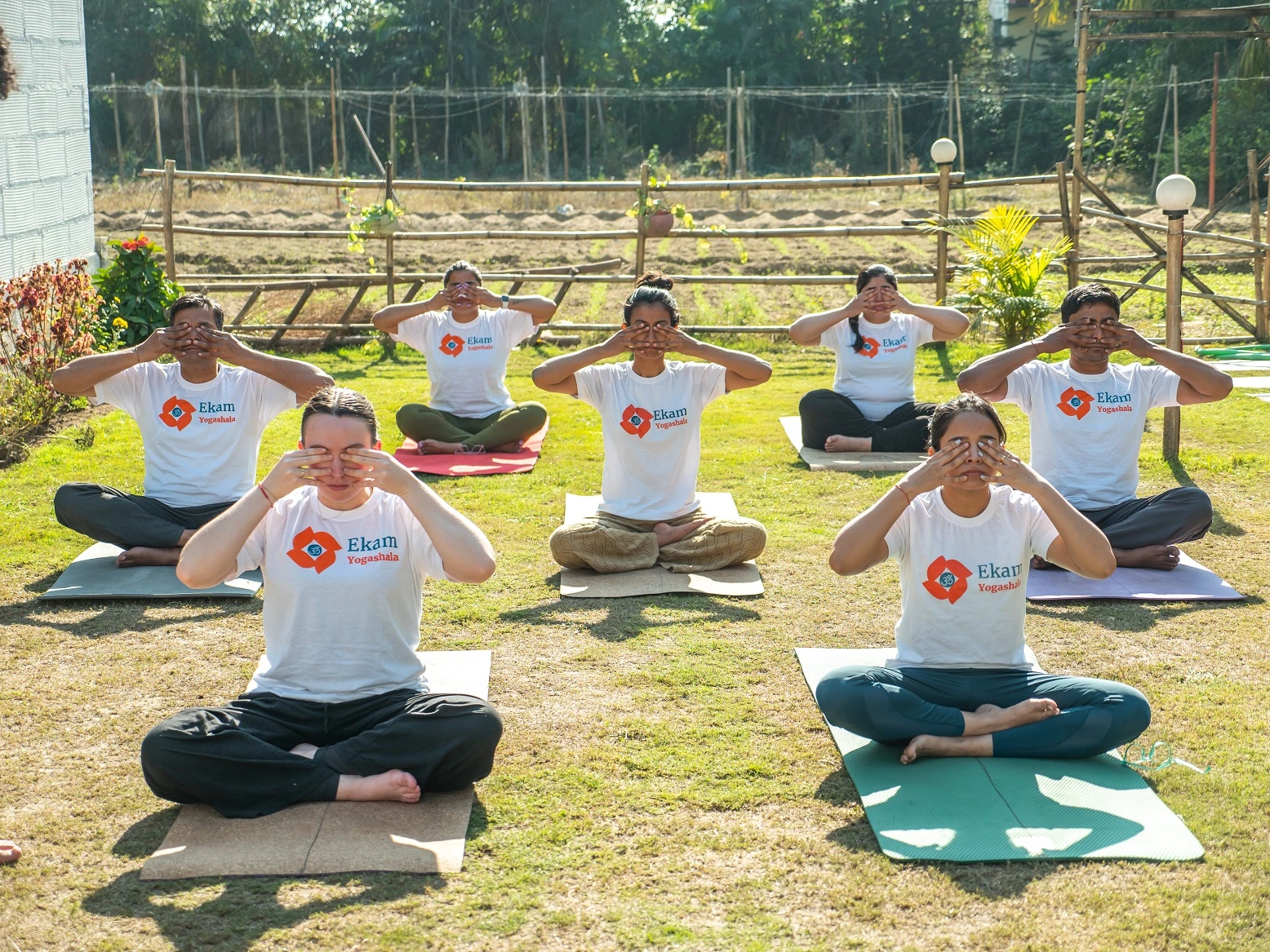
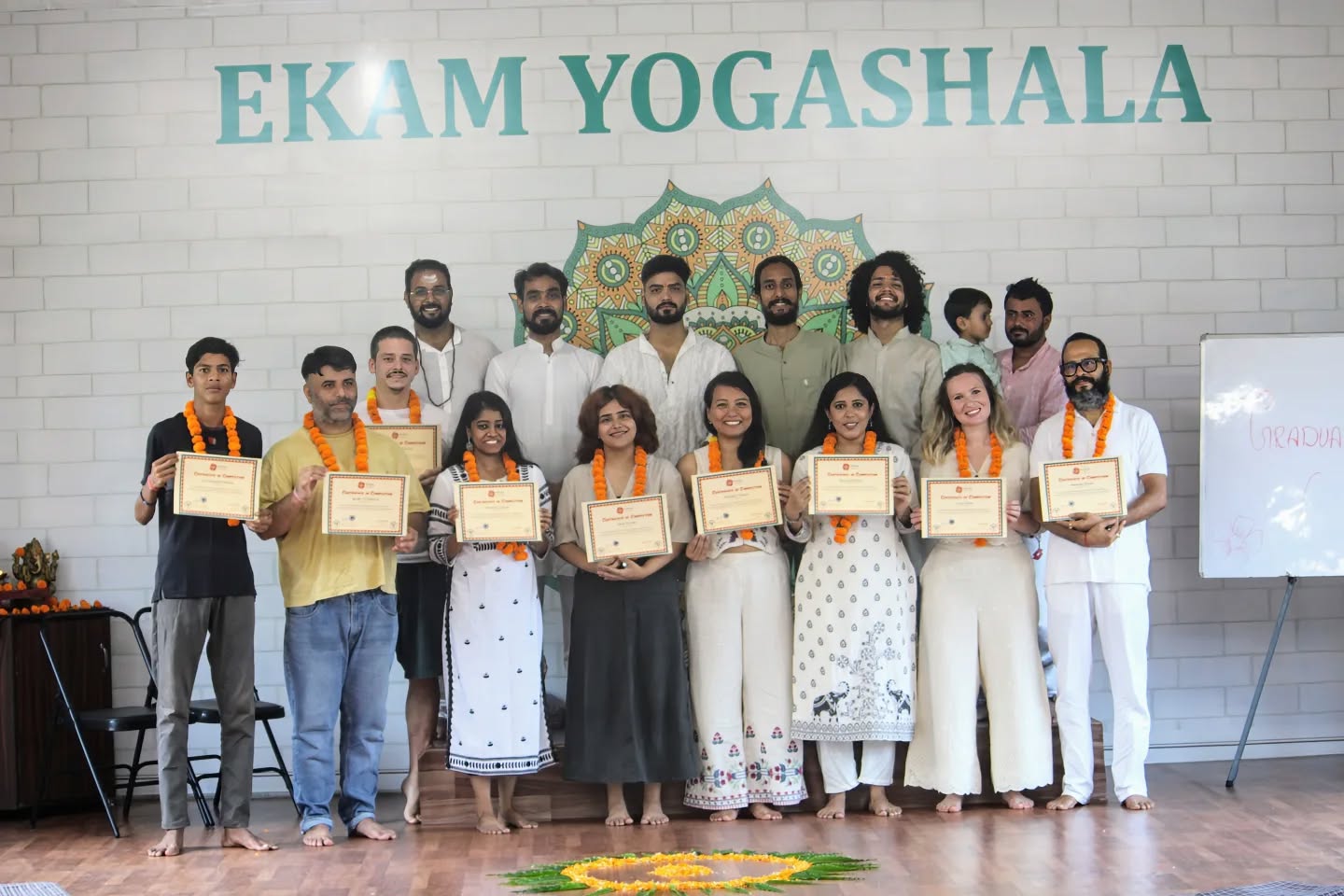
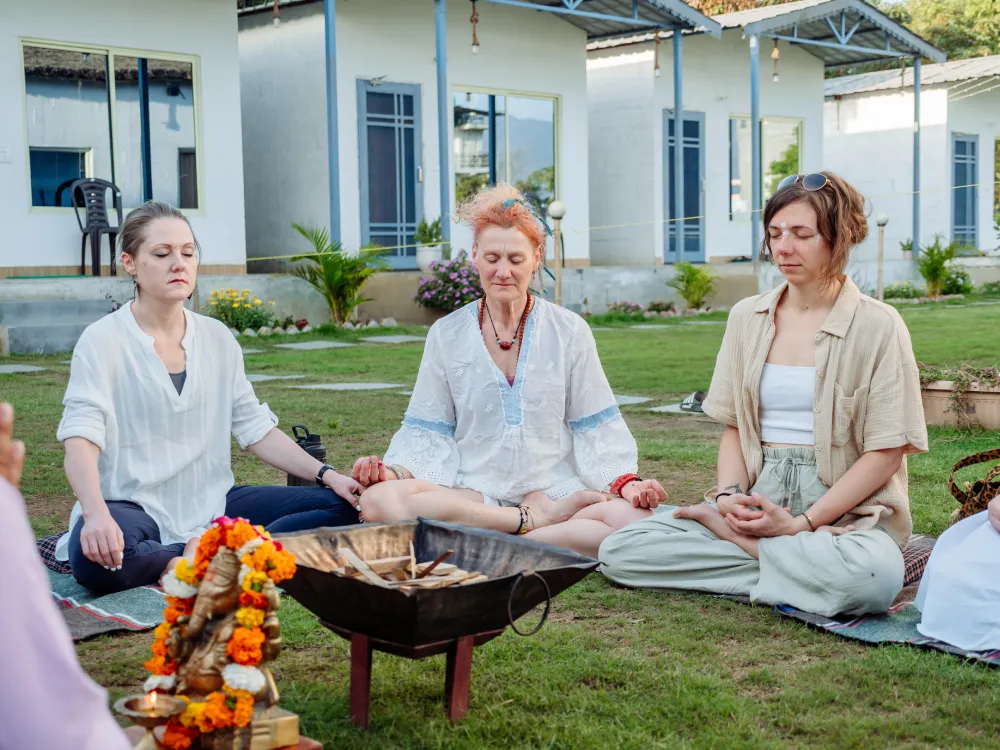
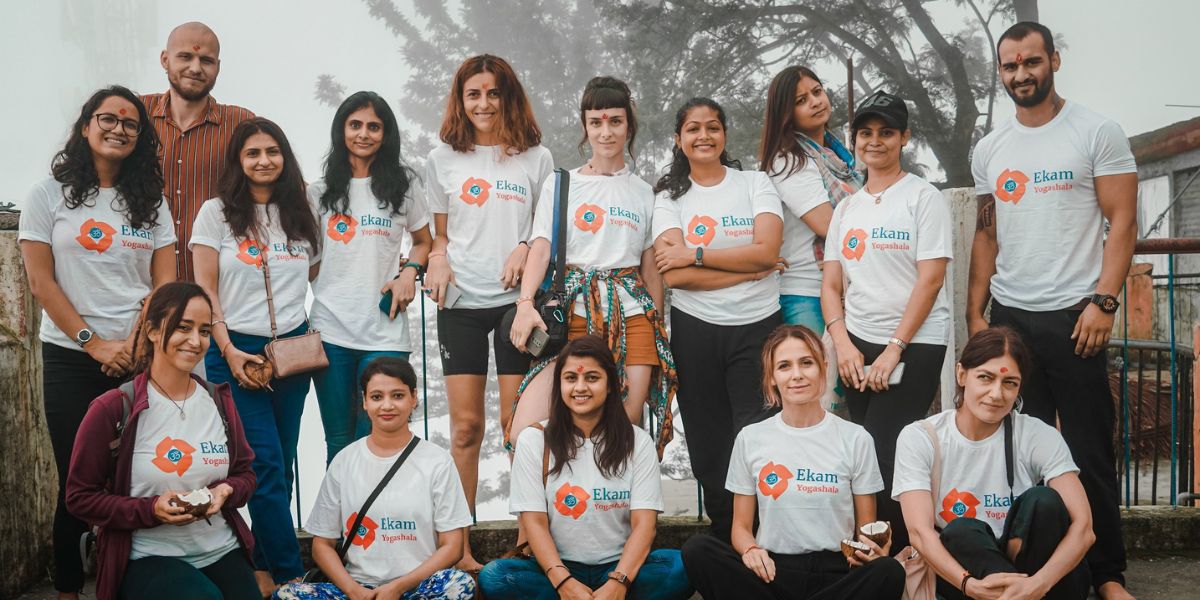
Residential training creates a structured environment that allows students to fully immerse themselves in yoga practice. Programs at schools such as Ekam Yogashala combine traditional teachings with modern instruction and provide a supportive community environment for students.
In-Person vs. Online Yoga Teacher Training: Quick Comparison
Choosing between online and in-person yoga teacher training depends on your goals, learning style, and career plans. Both paths offer certification, but the depth of practical experience can vary significantly.
| Factor | In-Person TTC Goa | Online YTT |
| Yoga Alliance Certification | Yes (accepted) | Yes (accepted) |
| Hands-On Adjustments | Daily practice on real bodies | Not possible |
| Proprioceptive Training | Full embodied learning | Theory only |
| Schedule Flexibility | Fixed (immersive) | High (self-paced) |
| Environment for Learning | Sattvic Goa setting | Your home or office |
| Teaching Confidence | High | Moderate |
| Nervous System Reset | Yes (detox from digital fatigue) | No |
| Community & Lineage | Live, authentic sangha | Limited |
| Career-Readiness | Full | Partial |
Online Yoga Training Reality: What Most Courses Don’t Tell You
The popularity of 200 hour online yoga teacher training programs has grown rapidly. Many people choose them because they are convenient and affordable. But when discussing online vs in-person yoga teacher training, one uncomfortable truth often gets ignored.
- The average completion rate for online yoga teacher training in India programs is under 30%. (Source: YogiTimes, 2026)
- Only 30% of people who finish a 200-hour YTT go on to teach yoga full-time. (Source: Yoga Alliance / YogKulam, 2024)
- Around 55% teach part-time, often struggling with sequencing classes and holding student attention.
- The online yoga certification market is growing 12.3% annually, faster than traditional training. (Industry research, 2027 projection)
So the real question is not about certification. It is about capability. A certificate from an online yoga teacher training looks good on paper. However, real teaching confidence often comes from hands-on experience in actual classrooms.
The Muscle Memory vs Digital Memory Gap in Yoga Teacher Training
Here is something most anatomy textbooks never explain clearly: proprioceptive awareness. This is the body’s ability to sense its own position in space. It allows a teacher to feel whether the hips are truly neutral, the spine is genuinely long, or a student’s shoulder blade is moving correctly.
This is where the difference in online vs in-person yoga teacher training becomes obvious.
Online learning usually teaches the geometry of a pose. You see angles, alignment diagrams, and demonstrations on video. But a residential yoga teacher training in India teaches the gravity of a pose. You experience how the body actually moves, how balance shifts, and how breath affects posture.
That distinction shapes the kind of teacher someone becomes. One teacher repeats cues from memory. Another teacher can read the room, observe bodies in motion, and guide students safely.
The Tactile Gap: Why You Cannot Learn Adjustments Through a Screen
Physical adjustments are an essential part of safe yoga teaching. Guiding a student’s spine, correcting pelvic alignment, or opening a collapsed chest requires tactile awareness. This skill develops through repeated hands-on practice, not by watching recorded demonstrations.
At Ekam Yogashala’s yoga teacher training course in Goa, students practice adjustments daily with classmates of different body types, ages, and flexibility levels. This experience builds biomechanical empathy. It helps you notice subtle breathing patterns and body tension before a student moves.
Online training usually provides
- Theory-based anatomy lessons
- Visual learning of alignment principles
- Pose demonstrations through videos
In-person training in Goa provides
- Hands-on posture adjustments
- Real-time feedback from experienced teachers
- Daily correction and guided practice
The real difference is learning how to guide real students safely.
Key Benefits of In Person Yoga Training
1. You Develop Real Teaching Presence
Presence is built through 28 days of leading classes and receiving real-time feedback, helping you command a room with the authority required for the professional market.
2. You Learn to Adjust Bodies Safely
Mastering hands-on adjustments is a core responsibility. In-person training offers supervised practice on diverse body types to ensure you can guide students safely and ethically.
3. Your Personal Practice Deepens Non-Linearly
Practicing several hours every day during intensive yoga teacher training in Goa accelerates physical and mental development. Many students notice rapid improvements in strength, posture alignment, breathing control, and meditation focus.
4. You Build a Global Teaching Network
Students attending a yoga teacher training course in Goa often train with people from the United States, Europe, Australia, and other countries. These relationships frequently lead to retreat partnerships, studio opportunities, and long-term collaborations.
5. The Environment Eliminates Digital Fatigue
Another major benefit of in-person yoga training is the learning environment. A calm setting with structured routines, clean food, and limited screen exposure helps students disconnect from daily stress and fully focus on practice.
Does Yoga Alliance Accept Online Certification?
Yes. Yoga Alliance online certification is recognized. Both online and in person programs registered as an RYS (Registered Yoga School) produce graduates who qualify for RYT 200 status.
The credential is the same. What is not the same is the readiness behind it.
Studios in the USA particularly in competitive markets like New York, Los Angeles, and Chicago are increasingly distinguishing between teachers certified online and those who completed a residential yoga teacher training in India program. The question in hiring is not “Are you certified?” It is “Can you teach a 6 a.m. vinyasa class to 35 people next Monday?” Thus, a best online yoga teacher training certification gives you the paper. An immersive residential TTC in Goa gives you a presence.
Is Online Yoga Teacher Training Worth It?
The answer depends on your goals. If you want to deepen your personal practice, learn yoga philosophy, or add knowledge to an existing certification, online yoga teacher training can be a useful option. Many programs provide affordable online yoga TTC. This makes it easy for students to learn flexibly without needing to travel.
However, if you want a career that lasts, where you lead classes with confidence, adjust students safely, and keep them returning, a residential yoga teacher training in India is what you need. It offers hands-on experience that can make all the difference.
Ready to Close the Gap Between Knowledge and Presence?
Many aspiring teachers ask, “Can you become a yoga teacher online?” technically, yes. But true teaching confidence grows through real practice, direct guidance, and immersive learning. A residential yoga teacher training in India experience helps you build the presence, discipline, and practical teaching ability that online courses rarely provide.
If you are ready to turn knowledge into real teaching skills, join Ekam Yogashala’s in-person yoga teacher training in Goa programs. Explore our programs today. Call +91 75000 70828 or email yoga@ekamyogashala.com to reserve your place before seats fill.
Frequently Asked Questions
1. Can you become a yoga teacher online?
Yes. You can complete a 200 hour online yoga teacher training from a Yoga Alliance registered school and receive certification. Many teachers mix online yoga teacher training with in-person practice. This helps them build skills in adjustments and gain real confidence in the classroom.
2. Is online yoga teacher training worth it?
Yes for theory, philosophy, and flexible learning. However, if your goal is teaching professionally, combining online yoga teacher training with in-person yoga teacher training in Goa helps build stronger teaching confidence and practical experience.
3. Does Yoga Alliance accept online certification?
Yes. Yoga Alliance online certification from a registered RYS school qualifies graduates for RYT 200 or RYT 500 status. The certification is recognized globally, whether earned through online study or residential yoga teacher training in India.
4. What is the best online yoga teacher training certification?
The best online yoga teacher training certification programs are Yoga Alliance registered, include mentorship sessions, and structured teaching practice. Many students combine online study with in-person yoga teacher training. This helps them gain real teaching experience.
5. How long does online yoga teacher training take?
An online yoga teacher training usually takes three to six months when studied part time. Intensive programs may finish faster, while in-person yoga teacher training residential courses typically run about 24 to 28 days.
6. Is in-person yoga teacher training in India worth it for Americans?
Yes. Many US students pick residential yoga teacher training. It provides real teaching traditions and usually costs less than Western programs. Yoga teacher training course programs also provide immersive practice environments.
7. What is a hybrid yoga teacher training course?
A hybrid yoga teacher training course combines online learning with residential training. Students study theory through online yoga teacher training modules and complete hands-on practice during in-person yoga teacher training sessions.
8. What is the difference between RYT 200 and RYT 500?
RYT 200 is the entry level Yoga Alliance certification earned after completing a 200 hour program. RYT 500 requires advanced training hours and is often gained through residential yoga teacher training in India programs.